Showing posts with label history. Show all posts

Monday, January 14, 2013

Waves of ethical and religious change

I'm looking at Robert Fogel's The Fourth Great Awakening and the Future of Egalitarianism, starting here.

So Fogel argues the main challenge is no longer material inequality, but spiritual inequality. He adds a theory of cyclical evolution of ethics in responses to changes in technology and the economy. This is quite intriguing.

While economic growth since 1700 has been relatively steady and technological change has accelerated, there has been a recurring lag between the vast technological transformations and the human adjustment to those transformations. It is this lag which has produced the crises that periodically usher in profound reconsiderations of ethical values, that produce new agendas for ethical and social reform, and that give rise to political movements that champion the new agendas. p8-9.

People must evolve new ethical perspectives to cope with technological transformations. Exactly, and it seems obvious when put like that. He does not appear to adopt a vulgar Marxist-type approach, however, where ethics and culture are simply superstructure above the real economic base. People adapt their ideas ro suit circumstances when external events force them to reevaluate their perspectives and needs. And those ideas in turn create political and legislative programs.

Interestingly, he argues that this revaluation shows up in religious movements first, long before electoral politics, which, because of its compromise and balancing tends to lag behind. For example,

The greatest of all reform movements in American history, the abolition of slavery, was for decades almost exclusively a religious movement until a number of religiously inspired Northern politicians developed brilliant tactics and strategies necessary to create a winning antislavery coalition. P7

So he has a theory of how and why ethical transformations occur, which is fascinating. Why should religious movements be more responsive? Because in the frenetic competition of American religious denominations, indepedent congregations are likely to evolve responses to new ethical needs far quicker than political parties. The Awakenings are more political than relgiious, but they show up more quickly in relgious reaciton to new technology and new circumstances.

The religious response has been more rapid because of the high degree of independence of specific evangelical congregations from hierarchical control and from the restraints imposed on political parties, which must often trim their policies to maintain coalitions. P9


Great Awakenings

Evangelical religion reacts more quickly than more hierarchical and less populist churches. It means there have been a series of "Great Awakenings" in American religious life, which spilled over into politics after a generation or two.

These Great Awakenings are reform movements with an ethical/programmatic phase followed by a legislative/political phase, both of which arise out of the lag between technological change and institutional adjustment. Each Awakening lasts about one hundred years, including a declining phase in which exponents of one great awakening clash with those of the next. The First Great Awakening began in the 1730s and ripened into the American Revolution against the British Crown. The Second Great Awakening began about 1800 and produced the crusade against slavery that eventuated in the Civil War. The Third Great Awakening arose at the end of the nineteenth century and led to the rise of the welfare state and policies to promote diversity. The Fourth Great Awakening, which began about 1960, has recently entered its political phase and is focused on spiritual reform. p9-10

Importantly, the Awakenings mostly came from the margins of society.

The Great Awakenings have not usually originated from the top; generally, they have welled up from below and have often been given voice by ministers and novice leaders on the fringes of the establishment. p42

The First Great Awakening eroded older Puritan beliefs and emphasized individial rights. The Second Great Awakening emphasized equality of opportunity, and moved even away from Calvinist ideas of predestination towards a sense , influenced by Methodist theology, that people could work towards their own salvation.


Individual sin versus Social Corruption

The third Great Awakening arose in large part because of the challenge of industrial development and the growth of huge enterprises. That produced a move away from emphasis on individual sin and corruption to social reform, as well as economic and social egalitarianism. Equality of condition mattered more than equality of opportunity.

The Third Awakening rejected the idea that poverty was the wages of sin, and came to terms with Darwinism and science. The innate depravity of man was abandoned in favor of a conception the innocent young corrupted by society.

Modernists in the mainstream denominations evolved into the Social Gospel movement.

Its leading figures argued that, if America was to realize itself, it would have to change not only its creed, its theory of man's relationship to God, but also its ethics. It would have to make poverty not a personal failure, but a failure of society, and evil would have to be seen, not as a personal sin, but as a sin of society...The victory of the modernists and the Social Gospellers laid the basis for the welfare state, providing both the ideological foundation and the political drive for the labor reforms of the 1930s, 1940s and 1950s, for the civil rights reforms of the 1950s and 1960s, and for the new feminist programs of the late 1960s and early 1970s. p24-5

The first three awakenings are part of mainstream historical scholarship, but Fogel is more isolated is seeing a fourth awakening, including the rise of the religious right in recent decades. Logically, however, major shifts in technology and transformation of the economy would entail some sort of Fourth Awakening in due course, however. And it is undeniable, as he points out, that the mainstream Protestant denominations have shriveled, and evangelicals have risen to over a third of the electorate.

Meanwhile, the Third Awakening forces have been secularized.

As modernist theory grew stronger, the supernatural aspects of religion diminished among those creating the New Theology, and conversions ceased to be central to their missionary work. Social reform increasingly replaced personal reform as the center of the struggle to perfect American society... The essence of religion became the elimination of poverty and inequality. p121

The rise of the professional classes has been one of the main economic transformations, and they tend to be secularized, along with a liberal mainstream media. The universities were originally founded largely to train one profession - the ministry. But the growth of new professions and vast increase in demand for skilled graduates transformed them. Academic disciplines which generally had their modern origin in 19th century theological disputes (such as economics, as founded in the American Economic Association) tended to forget the history of their disciplines.

It would be easy to quibble with this scheme of revivals and awakenings, and some would be uncomfortable putting religious feeling so close to the heart of economic and political life. Nonetheless, it is a viable and interesting theory of how and why changes in ethical perspective come about, and I had not read about these movements in any detail before. It is a story of how deep changes in the assumptions about human nature and possibility ramified through theological debate and into practical political outcomes over a period of generations.

The story is now more secularized, as ethical debate now takes place on a much wider sphere than it did one hundred years ago. But it is equally clear that purely secular perspectives can overlook much of the deeper changes going on in the world, which include the massive growth of evangelical religion in Asia, Africa and Latin America. Something is going on out there even if it is not evident in the New York Times or the New York Review of Books view of the world. The world is less secular on the whole than we think.

Inequality of Income

Moreover, many of Fogel's do not rely on his Awakening scheme for their force. He is skeptical of the Third-Awakening focus on income distribution, and he has good technical reasons for saying so. For one thing, that approach underestimates the massive improvement in nutrition, healthcare and life expectancy since the nineteenth century, as well as more leisure, both of which accrued more to the poor than the well-off.

The theory projected by the Social Gospelers, and embraced by modernism generally, held that cultural crises could be resolved by raising incomes. That theory has been given a long trial and has turned out to be incorrect. Despite the sharp rise in incomes, especially at the low end of the income distribution, the moral crisis of the cities remains unresolved. Although income transfers have gone far beyond the mild redistributions advocated by Bascom, Ely and Commons, such problem as drug addiction, alcoholism , births to unmarried teenage girls, rape, the battery of women and children, broken familitgies, violent teenage death , and crime are generally more severe than they were a century ago. p172

Income redistribution is at the core of the current political debate. But it is also increasingly irrelevant. We will conclude looking at the book tomorrow.

Sunday, January 13, 2013

The Fourth Great Awakening

I read Robert Fogel's The Fourth Great Awakening and the Future of Egalitarianism over the holidays, and it is a very interesting book. Fogel is a Nobel Laureate in Economics (1993) , mostly for his earlier quantitative economic history and study of the historical economics of slavery in the US. Perhaps he felt liberated to write a much more original book, published in 2000. Yet it is based on deep knowledge of US history.

He focuses on the impact of the waves of religious revival in the US on broader growth and public policy. The main challenge for egalitarianism now is not material redistribution, he says, but the maldistribution of "spiritual resources."

The agenda for egalitarian policies that has dominated reform movements for most of the past entry - what I call the modernist egalitarian agenda - was based on material redistribution. The critical aspect of the postmodern egalitarian agenda is not the distribution of money income, or food, or shelter, or consumer durables. Although there are still glaring inadequacies in the distribution of material commodities that must be addressed, the most intractable maldistributions in rich countries such as the United States are in the realm of spiritual or immaterial assets. These are the critical assets in the struggle for self-realization. p2

Traditional measures of income inequality are inadequate. They ignore consumption of leisure and improved health, for example.

They focus on a variable - money income - that currently accounts for less than half of real consumption and that in a generation may account for less than a quarter of real consumption. Such measures shed little light on the most intractable forms of poverty (those related to the unequal distribution of spiritual resources). Nor do they bear on the capacity of individuals to overcome the social estrangement that undermines their quality of life. p3

So a politics based on income transfers is exhausted. That naturally leads to consideration of the good life.

A good place to begin a consideration of the content of a postmodern egalitarian agenda is with Socrates' question, What is the good life? That was a crucial question not only for the sons of rich Athenians but for the sons of the landed rich throughout history. Freed of the need to work to satisfy their material needs, they sought self-realization in public service, military adventures, philanthropy, the arts, theology, ethics and moral philosophy. p2

Naturally, I felt a huge sense of recognition and agreement at this point, as I believe that without some sense of the good life public action is empty. Fogel adds another twist. State action cannot redistribute such spiritual resources.

Realization of the potential of an individual is not something that can be legislated by the state, nor can it be provided to the weak by the strong. It is something which must develop within each individual on the basis of a succession of choices.

The quest for spiritual equity thus turns not so much on money as access to spiritual assets, most if which are transferred and developed privately rather than through the market. Moreover, some of the most critical spiritual assets, such as a sense of purpose, self-esteem, a sense of discipline, a vision of opportunity, and a thirst for knowledge, are transferred at very young ages. P4.

This is very much in tune with what I have been arguing on this blog. The main challenges we face are more ethical than economic now, about how people can be helped realize the good life and what kinds of behavior should be rewarded. It is surprising to see such a clear statement in this vein from an academic economist - although economic historians consistently seem more heterodox and interesting than mainstream model-builders.

We will look at more tomorrow, especially his emphasis on how ethical concerns develop over time.


Wednesday, January 2, 2013

From Mercantile Exchange to Railroads

We're looking at Double Entry: How the Merchants of Venice Created Modern Financeby Jane Gleeson-White, starting here.

So double-entry book-keeping served as a foundation stone of capitalist rationality and, on an individual level, business success. Luca Pacioli's advice would echo through generations of clerks laboriously maintaining ledgers.

In Pacioli’s view, three things are needed by ‘anyone who wishes to carry on business carefully. The most important of these is cash or any equivalent, according to that saying, Without this, business can hardly be carried on.’ The second thing necessary in business ‘is to be a good bookkeeper and ready mathematician’. The third ‘and last thing is to arrange all the transactions in such a systematic way that one may understand each one of them at a glance, ie, by the debit and credit method’. Not much has changed today.

Production and Decisions

Capitalism developed and changed in the eighteenth and nineteenth centuries, however. Book-keeping evolved into accounting. The medieval core of double entry proved durable for these new, much larger enterprises.

This vast new range of double-entry applications reflects the extraordinary expansion of business from the late eighteenth century to the close of the nineteenth, a period which saw the rise of the joint stock company (a business organisation which was funded by selling shares to investors who became partners in the venture), and marks the formative era of accountancy. During these decades, accountants transformed a mere system of recording exchanges into a method of managing and controlling business. The first signs that double entry would be equal to the task of monitoring and directing this new industrial world of factories, wage labour and large-scale capital investment were found in the north of England, in the pottery works of Her Majesty’s potter, Josiah Wedgwood (1730–95)—a factory called Etruria, named, by chance, after the ancient Italian region home to Pacioli’s Sansepolcro.

Wedgwood ran a large business that often did not make much money, for inscrutable reasons. So he decided to investigate.

During this period of scrutiny, Wedgwood made an important discovery—the distinction between fixed and variable costs—and he immediately understood the implications of their difference for the management of his business.

A new form of production - large factories - led to the beginnings of cost and management accounting. This was part of a much broader evolution from a system centered on mercantile exchange to one also suited for production and accountability.

The shift in outlook required to move Pacioli’s bookkeeping system beyond its mercantile origins in an exchange economy (where it recorded the exchange of goods, owing and being owed, paying and collecting debts) to manufacturing, where the emphasis is on the production of goods (the conversion of materials and labour into products) was huge.

The growth of railroads in the mid-nineteenth century brought a whole new set of issues. They required outside investment, which both meant more audit control to prevent fraud, and clearer distinctions between income and capital, so investors could be paid dividends out of actual income.

Not only did a new form of production—factories—challenge and alter double-entry bookkeeping from the 1770s, but the financing and managing of the vast investments required to build railways during the same period of industrial expansion brought new issues of accounting and accountability.

The key accounting issue in a corporation is the amount of profit available for dividends—which means that a corporation must properly distinguish between capital and income, because profits derive from income, not from capital. This new laser-like focus on profits and dividends brought two new accounting questions to centre stage: How to calculate income or profit? And how to value assets? These questions were rarely asked before 1850 but by the end of the century they had become the major preoccupations of practising accountants.


Tuesday, January 1, 2013

Double Entry and the Modern World

I read Double Entry: How the Merchants of Venice Created Modern Financeby Jane Gleeson-White last week, largely motivated by wanting to know some of the deeper reasons behind the surface apparatus of Quickbooks, which for various reasons I have to figure out soon.

It sounds like a dry subject. But the book is historically colorful, thought-provoking and well-written. Accounting numbers rule much of our lives and way of seeing the world. But they have a history and limits and flaws.

Measurement and capitalism

She tells the story of how Italian monk and mathematician Luca Pacioli in 1494 first wrote down the methods Venetian merchants had used to keep accounts, possibly for several centuries before that. The invention of double-entry clarified notions of cost and profit. According to some historians perhaps it led to capitalism itself.

In six pages Sombart set out his belief that the emergence of capitalism and the appearance of double-entry bookkeeping in the thirteenth century are causally related. He wrote: ‘It is simply impossible to imagine capitalism without double-entry bookkeeping; they are like form and content.’

Weber’s definition of a ‘capitalistic enterprise’ is derived from the concepts of double-entry bookkeeping: ‘a rational capitalistic establishment is one with capital accounting’. Like Sombart, Weber argues that double entry is significant because it makes possible an abstract measure of income and expenses—and therefore enables the calculation of profit, the key component of capitalistic business practice. Weber also believed that the formal rationality of double entry made the world a cold and disenchanted place—and, ominously, predicted that double entry would continue its rule ‘perhaps until the last ton of fossilized coal is burnt’.

The new double-entry methods caused a deeper change in perception:

He calls Pacioli’s treatise on double-entry bookkeeping ‘a major innovation in economic history’. First, because double entry provided the means of discarding all information extraneous to decision-making, leaving behind only numbers. And second, because it translated these numbers into a common measuring tool called ‘profit’, which allowed a relatively precise evaluation of actions. Double entry thus transformed business books from mere memory aids into records which allow the calculation of profit—and which can therefore be used to measure the success of each individual transaction and of a business generally.

But this did not come without a price.

We are now so familiar with this once innovative (and largely arbitrary) cost-benefit way of thinking that we take it for granted and cannot imagine it otherwise. And yet, as we shall see, this profit-driven way of thinking encouraged by double entry is not only driving managers to drink, academics to pull their hair out, politicians to short-term opportunism and most human beings to suffer in some way, but it is also destroying the world beneath our feet.

She argues that accounting is poorly suited to count environmental damage, for example. This is a problem when accounting has become central to the practice of policy and government.

National statistics

One of the main extensions of accounting is modern national income accounting. It is so familiar (at least if you have studied economics) that we forget how relatively recent it is. Keynes and Kuznets largely invented it, and both were skeptical about its use.

As a thinker of great depth and complexity who saw economics above all as a moral practice, Keynes was suspicious of statistics and considered these quantitative measures of the national economy as exceptional, emergency measures demanded by the times. In the budget speech which presented these accounts for the first time, the British Chancellor expressed the same view, stressing that the publication of official estimates of national income and expenditure should not be regarded as setting a precedent.

That did not stop a massive increase in the use of techniques which had proved useful during the war.

In 1952, very few statisticians were familiar with the theory and practice of national accounting. This would soon change irrevocably. The work done by Stone, Kuznets and others became the foundation of international accounting, and their national income statistics used to measure economic growth would soon become the key indicator of national success and government performance.

But even the main originator of much national income accounting was skeptical of its application.

But the accuracy and usefulness of national income measures have been questioned from the beginning, by Keynes and others, including Simon Kuznets himself. For example, Kuznets believed the national accounts should include the value of unpaid housework, despite the fact that including this vast contribution to the national economy would present statisticians with the difficult task of making monetary estimates of this valuable work. The US Commerce Department refused to calculate these estimates—and as a result Kuznets broke his association with the department in the late 1940s. Kuznets was also concerned about the effects on people’s lives of the modern economic growth that these statistics encourage as an end in itself.

GNP continues to be questioned as an adequate measure, most significantly recently in the Stiglitz-Sen-Fitoussi study.

Perpetual scandal

The numbers can often conceal as much as they convey, and we can mistake a false impression of precision for truth. The numbers sometimes are outright lies, for one thing. Accounting is also inseparable from scandals, she says, and always has been. People have not lost confidence in accounting despite failure to detect fraud or indications of problems on a litany of cases from Enron to Worldcom to RBS.

However, not only has no such fall ensued but it turns out that these accounting scandals are a regular feature in the landscape of accounting. They are as old as the profession itself, dating back to the earliest days of the formalised use of collective capital: the corporation. Corporations and accounting scandals go together like Gordon Gekko and greed. The nineteenth and early twentieth centuries are rife with corporate collapses of the magnitude of Enron’s and comparable in their elements. And they all stem from significant accounting misstatements orchestrated by influential senior managers. Equally, the responses of lawmakers and watchdogs have been the same over the past one hundred years: tinker around the edges of the law, found new watchdogs, proclaim a new era of greater scrutiny and let accountants and auditors out to play with the managers of vast sums of other people’s money.

We'll look at more tomorrow.


The Importance of Stocks and Depreciaton


We're looking at Double Entry: How the Merchants of Venice Created Modern Finance by Jane Gleeson-White, starting here. Book-keeping evolved into accounting as outside investors needed assurance that dividends were paid out of actual income, not capital.


Railways and factories also wore out, however, which led to another important concept: capital stock and depreciation.

The advent of the corporation raised several other key accounting issues; for example, how to calculate the declining values—due to wear and tear—of large investments in machinery, rails, rolling stock (or railway vehicles), and so on. This problem gave rise to the concept of depreciation.

It took a long time for accountants to come to terms with depreciation and properly accounting for assets. And this is still a problem, she says, when it comes to the environment since many assets are free.

This is because until recently economists have assumed that natural resources are so plentiful that any loss of them is insignificant, not worth counting. They assumed that natural resources like water, soil, forests and air were free gifts of nature.

But just as the nineteenth-century railway entrepreneurs had to learn that human-made capital—rails and machinery—wears out and must be depreciated, so some economists are beginning to understand that nature’s capital is also subject to wear and tear and depletion. Cambridge University’s Professor Sir Partha Dasgupta is one economist who is critical of the GNP and its use to judge the progress or otherwise of nations. He argues, ‘as so many economists have already done, that GNP’s main weakness lies in the fact that it is insensitive to the depreciation of capital assets’. And from an environmental point of view, this is critical.

The Modern Economy is about Stocks

This is no doubt true. But she perhaps over-emphasises environmental gaps to the exclusion of other social assets like trust or quality of life.

The larger point is we are often too focused on flows rather than stocks, including the depreciation of assets (stocks meaning an amount, like a stock of wheat, rather than an equity share like the stock exchange.) This is a basic economic distinction we often forget. As Dasgupta says, we need to be sensitive to the depreciation of capital assets.

We are much better at being conscious of flows of income rather than the valuable stock of assets which produces that income. Yet many of the great economic challenges of our era have more to do with stocks than flows of income. Many or our capital assets, such as the knowledge required to build an Intel processor or the song "Hey Jude" do not depreciate in the traditional way. They may have to be re-learned or passed on, but they do not wear out.

So what happens when the stock of our valuable assets, properly defined, gets disproportionately much larger than money income flows? In many ways, our prime objective should be to increase the stock of assets. Income and distribution are secondary factors , especially of many of the benefits flowing from those assets are free. Some of our political thought gripes towards this, especially those who think capitalism should be left unfettered to create wealth which government can then redistribute. But that often confuses income with value.

We will come back to this point another time.

Finally, Gleeson-White emphasizes again how the numbers may often conceal deeper uncertainties.


Even accounting’s most fundamental concepts and practices, such as income measurement and asset valuation, are based on uncertainties. Accountants still cannot agree on how to define income, the measurement of which remains one of the intractable problems in financial accounting theory and practice. The valuation of assets only becomes more complex and more fiercely debated as modern global corporate structures and financial instruments become increasingly labyrinthine, and income measurement, the key to determining profits and therefore dividends, is inextricably linked to this contentious, chimerical practice of asset valuation. Nor is the crucial measurement of costs an objective process: costs are also highly contestable figures and may result as much from the collusion or rivalries of firms as from any other actuality. Accrual (or corporate) accounting—the need to allocate revenues and expenses between accounting periods and to value assets and liabilities at the end of an accounting period—raises problems which have never been solved and are probably incapable of solution. Numbers can be negotiated to make management look good. In effect, ‘accounts are used to justify decisions and to excuse mistakes’.

She concludes


In an era of international capital, when our wealth is more than ever tied up in its fortunes, and at a time when corporations, governments and financial institutions are demonstrating their fallibility on a global scale, it is essential that we are aware of the somewhat arbitrary laws of account that govern them—especially because it is in the labyrinthine workings of our accounting systems that value itself is assigned. It seems that if we want to bring our infinitely voracious consumerism into line with the resources of our finite planet, we must consider giving our planet a value that the market can recognise and account for, assign a monetary value to the oceans, air, forests, rivers, wildernesses. • Delete this highlight

(My bold). In the end, we come back to the problem of economic value. There have been many major shifts in perception of costs and decisions and stocks and accountability and depreciation. Together, they make up the modern economy.

It is time for another major shift, to cope with intangibles and abundance and our reliance on those abundant stocks. Value should not be defined by arbitrary default.


Wednesday, December 26, 2012

The Swerve: Off course

It's nice to have a few clear days over Christmas. In between airplanes and turkey I read The Swerve: How the World Became Modern by Stephen Greenblatt. I have mixed feelings about it, though.

I liked the evocation of late medieval and early Renaissance culture. The book centers on the rediscovery of Lucretius' De Rerum Natura on a monastery library and subsequent impact on thought. The book gives insight into the timeless nature of bureaucracy and court politics, as represented by the "lie factory" of the Vatican Curia at the time. And there is a wistfulness about the loss of so much from the ancient world, all the classics that must have been lost.

But I found the book to be a little shapeless on the whole. Some reviewers have been bitterly critical of its factual claims.

There seems to be an underlying strain of anti-Christian bigotry. The book represents the redscovery of Epicurean atomistic doctrine as a liberation from Christianity, which apparently for Greenblatt represents everything cruel and backward and fearful. As other reviewers point out, classical wisdom had never been as wholly lost as Greenblatt implies, and many of the advances of learning at the time came from the church.

Of course, the medieval church has much to answer for. But so does modern progressivism, murkily bound up with eugenics in the early few twentieth century, let alone socialism or other anti-Christian ideologies.

There seems to be a kind of liberal who believes giving offense is wrong, except when it comes to attacking Christianity. I am not a regular churchgoer, but I feel the hypocrisy in this kind of attack. Liberalism should not be established as an official state religion, prone to its own inquisitions. The deeper rhythms of Western history are resonant with Christianity, and telling early modern history as a simple black and white tale of the revalidation of ancient Epicureanism is shallow. I get increasingly irritated at what seems to be prejudice on these matters.

That should not stop criticism of the church or Christianity, of course. But Harvard professors ought not to indulge in crude cartoonish history either. For all the erudition on display in the book, it sometimes swerves close to shallow caricature.

I doubt the book was worth a Pullitzer.


Wednesday, November 14, 2012

Aristotle: Citizenship and Constitutions

We're talking about Aristotle's The Politics , starting here, because it's useful to go back to first principles and get a long view of our political and economic problems.

Citizenship

One matter which has attracted attention in social democratic circles in the last few years is the notion of citizenship. (I have a recollection of a long discussion in David Held's Models of Democracy, but haven't read it in a while.)

In general, however, our conception of citizenship is now very confused and unclear. It mostly tends towards simply residence, or miminal civic inclusion, rather than any common ethnicity or values or beliefs. Multiculturalism has become the ideal on the left, as well as sectional rather than national identity. We have had an immense shift in the last fifty years from ideas of national self-determination and decolonization to purely civic membership, with no obligations except to obey the law and pay taxes.

Aristotle ( who spent much of his life as a foreign resident in Athens) is adamant that citizenship is not just residence. Instead,

What effectively distinguhes the citizen proper from all others is his participation in giving judgment and in holding office. p169

A citizen must be capable of meaningfully participating in deliberation. So is the good man and the good citizen the same thing? Not quite. For one thing, it will depend on the kind of consitution a citizen lives under.

Not that good ruling and good obedience are the same virtue - only that the good citizen must have the knowledge and ability both to rule and to be ruled. That is what we mean by the virtue of a citizen - understanding the governing of free men from both points of view. p182

You cannot, on this perspective , really be a citizen by simply asserting rights or claims against the whole, rather than also seeing the perspective of those who must meet those rights and claims and comsequences.

And the virtue of the ruler and the citizen are not the same. The virtue of the ruler is mostly practical wisdom, or phronesis, which is neither theoretical nor technocratic, but skilled ability to judge particular situations. The virtues of the private citizen are wider.

Strikingly from our perspective, as a rule he also believed anyone who works as skilled craftsman or works for wages for others cannot be a citizen...

for it is quite impossible, while living the life of a mechanic or hireling, to occupy oneself as virtue demands. p184

That perhaps vanished as a sensible view with the increased scale of organizations with the industrial revolution. But the notion that one must have time and energy to reflect still stands, perhaps.

The common good

He then separates good from bad constitutions. The notion of a good constitution is very clear:

It is clear that those constitutions which aim at the common good are right, as being in accord with absolute justice; while those which aim only at the good of the rulers are wrong. p189

Looking to simpy private advantage, "be it of the one or the few or the mass" is a deviation, when the interests of one section of the community take precedence over the others.

This has contemporary relevance as well. Seeing politics as simply a matter of demographics, of sectional interest and redistribution and faction, obscures and denies the common good. I think this is where the Democrats, as a coalition of minority and special interest groups, usually go wrong, and where the GOP is joining them with its increasingly libertarian tone. Assembling enough sectional coalition elements to get to 50.1% is not the same as advocating for a view of the common good.

It also prefigures much contemporary analysis, such as the notion of "inclusion" in Why Nations Fail. Small groups often focus on dividing a small collective pie to their own advantage, instead of making the pie bigger.


Of course, there can be different views of the common good. But you need some conception of the good. And you need to go beyond the shallow Pareto optimality of welfare economics to have any real insight into the common good. We will come back to this later.

So Aristotle distinguishes six kinds of rule: monarchy, and its deviant twin tyranny; aristocracy (in the old sense of rule by the aristoi, or the best and most virtuous men, not traditional European landed upper classes) and its deviation, oligarchy, typically the rule of the few or the wealthy; and polity, which is "political control exercised by the mass of the populace in the common interest" versus its somewhat deviant twin, democracy, which is rule only "for the benefit of the men without means." , ie the poor. p190


Expert Judgement

Although he is against giving power to those with little or no time to reflect or use their reason, he is nonethless very supportive of wider participation. Almost 2300 years before the rise of the middle classes in Europe, Aristotle emphasizes wide deliberation and the importance of the middle sort. For one thing, a wider group often makes better decisions.

For it is possible that the many, no one of whom taken singly is a sound man, may yet, taken all together, be better than the few, not individually but collectively, in the same way that a feast to which all contribute is better than one supplied at one man's expense. p202

Interestingly, this is a little different from 'many chefs spoil the broth' or the cult of leadership. This too prefigures what we find today, such as the greater accuracy of aggregate economic forecasts that we were looking at the other day.

He has a dietary analogy: it is actually preferable to include "rougher" classes in discussion with the powerful:

By thus mixing with the better sort, they render good service in their states, in something like the way that a combination of coarse foods with refined renders the whole diet more nutrtious than a small amount of the latter. p204

So, says Aristotle, democracy is "the most moderate of the deviations" p239. And polity, the ideal, " is a mixture of oligarchy and democracy." p259

Similar comsiderations apply to experts, according to this author who spent twenty years in the original Academy. There are some things in which they should be judged by their peers. But in others, users are much better judges than expert producers.

.. that provided the mass of the people is not too slave-like, each indiviudal will indeed be a worse judge than the experts, but collectively they will be better, or at any rate no worse. Secondly, there are tasks of which the actual doer will be neither the best nor the only judge, cases in which even those who do not posses the skill form an opinion on the fnished product. .. So too the user of a rudder , the helmsman, is a better judge of it than the carpenters who made itl and it is the diner not the cook that pronounces upon the merits of a dinner. p205

This reminds me of William F. Buckley's assertion that "I'd rather entrust the government of the United States to the first 400 people listed in the Boston telephone directory than to the faculty of Harvard University ."

Expert judgement has its limits, according to one of the first experts.


Monday, November 12, 2012

Aristotle and the beginning of the Western tradition

With the election still reverberating in the air, it's a good time to get some longer perspective. I read Aristotle's The Politics (Classics) a few weeks so, but haven't talked about it yet. It is going to take at least a week to go through all the ramifications of this book.

Why read something two thousand years old?

Let me explain first of all how I was led to this. I started off this blog asking what had gone wrong with the economy. The answer, as I've gradually come to think, is we have a set of institutions and practices which are designed for scarcity, the oldest problem of mankind. But the basic things of life are now superabundant, at least in the West. We have more material stuff than we know what to do with. Our problem is not starvation, but obesity.

So we have solved the "economic problem", as Keynes called it. As we become more and more efficient and productive, the amount of labor devoted to the exchange economy - services as well as manufacturing - is plunging, just as agriculural employment did before in the nineteenth century. The economy is sputtering as a result.

Mainstream economists are confident that demand will simply shift to newer goods and services. But the nature of our wants and preferences are changing. Most mainstream economists are oblivious to this, because they take tastes and preferences as exogenous. The discipline ignores changing preferences by definition. It is a profound blind spot.

Many of the other things we want in life are changing, as we ascend what Maslow called the hierarchy of needs. The issue is that the things we increasingly want more of are not easily packaged and sold as excluable, non-rivalrous goods and services. They are not as suited to be as easily sold in the market, or delivered by the welfare state. It is difficult to establish clear property rights. (Ask the music or newspaper industries). Alternatively, as technology advances, the marginal cost of so many new goods and services is so low that (as in Facebook, or Google, or Flickr, or other paragons of the new economy) it is easier to give them away to the consumer.

Most of the value in the economy is now intangible, but we have been slow to catch up with the consequences. Mainstream economists are wrong to assume that new jobs will always be created to replace old ones, even though that has been true for the last two centuries.

I have become frustrated with our general lack of answers for what we do with the economy once many of the things we want are not material or easily tradable - such as connection, enjoyment, security, love and relationships, meaning and purpose. These are the things we turn to once we have enough shelter and food and security.

In other words, we need to take a much deeper look at what makes people flourish; not just what simply ensures survival, because flourishing has to be the objective of the economy from now on. And that means it is sensible to take a step back and look at long-run answers to this question, and older conceptions of human nature.

This is all the more important because most of our political theory has ignored this question for two hundred years, as the idea of ends or the "good life" have been sidelined. Liberal political theory - and I mean here liberal in the broad sense, which covers most of the current political spectrum - has as a matter of conscious intention no sense of what flourishing means or what our ends should be. Instead, it asks how people can minimally coexist together in a largely neutral state. In other words, it focuses almost entirely on the referee rather than asking what game we are playing, and what our goals are.

So, among other things, I was riveted by this book : After Virtue, by Alisdair McIntyre. He argues our ethical theory has become incoherent because we lost the much older tradition in the West, dating back to Aristotle, which is based on the virtues. That tradition places much more emphasis on character and judgement than impartiality, and it seeks the "golden mean" and ways to avoid excess rather than universal rules.

I read Aristolte's Nicomachean Ethics. There has also been a revival of interest in virtue ethics in contemporary philosophical circles. It has even reached some brave mavericks in the economics profession, such as Deirdre McCloskey's magnificent books.

I think many of our most intractable current political disputes arise because we argue over distribution without any reference to the virtues or actual flourishing. The left thinks equal distribution is enough. The right tends to want some standards of behavior or work ethic, but finds it hard to articulate this in liberal or libertarian terms. So it falls back on "the market". Our basic economic and political issue is what "fairness" means.

The Politics

This is why I wanted to read Aristotle's other major book, The Politics. Right at the dawn of the western tradition, he discusses what a society focused on virtue and flourishing and the Good Life ought to look like in practice. Part of the fascination is he is, of course, one of the foundational thinkers of the West, one of the most brilliant thinkers who ever lived. As an educator, he profoundly influenced the next two thousand years of history, including the Islamic world via Avicenna and the medieval Chirstian world via Aquinas. In practical terms, he tutored the most brilliantly successful conqueror in history, Alexander the Great, as well, so he is not simply an ivory-tower theoretical hermot. He taught in post-democratic Athens, but was eventually forced to flee by the mob who were hostile to Macedonian non-citizens like himself.

So we have a pragmatic voice of wisdom from a world which had grappled with many of our issues of freedom, leisure and democracy, but which is absolutely disintersted about our own political divisions. Aristotle lived two millenia before America was even discovered.

We will start off with what he says about household management, oikonomia - the origins of our word for economics.


Monday, November 5, 2012

International Legitimacy and the American election

There's one other thing I should say, particularly to foreign friends who may read this blog. I noted just how astonishingly lopsided the view of the election is in many other parts of the world, especially Europe. 97% of Germans would vote for Obama. In any other context you'd think this was a made-up party number from the old East Germany. How can we explain why a country with a conservative government which is getting tough with Greece can be so one-sided in its view of the GOP in the US? The same applies in most other European countries.

Europeans detested George W. Bush too, far more than can be explained by his general political stance. Bush, after all, was actually more in the Nixon mode in domestic policy terms, rather than particularly right-wing. He ran massive deficits and spending, drove through new entitlements like prescription drugs, argued for loose immigration policy with amnesty, and nation-building efforts abroad. He cut taxes, but so do many EU governments from time to time. W claimed to be a "compassionate" conservative. He was relatively left-wing in many senses.

But millions turned out to march against Bush in Europe. "US foreign policy" post 9-11 is the reason, perhaps, but Obama has surged in Afghanistan, killed Bin Laden and stepped up drone attacks.

So what is going on here? I think there is a much deeper split about the nature of international legitimacy, a rift that started with the Yugoslavian war and has only grown since with Iraq. Europe has been committed to multilateralism and pooling of sovereignty for over fifty years now. European elites believe that legitimacy flows down from international law, including human rights law and the United Nations.

So as an example, the response to the euro crisis has been an unending series of multilateral, indecisive and testy summits. The whole motivating force of the European project was to suppress individual national tendencies which could produce war.

This view is (mostly) alien to the United States, where the US constitution is almost four times older than the UN and infinitely more venerated. Legitimacy flows up from the people. The UN and international institutions have little legitimacy, and there is little domestic support for tying national freedom of action. America ( to generalize) sees no advantage in subjecting its actions to the multilateral approval of Europeans, who refuse to bear the burdens or responsibility of actions or defense spending in any case.

So on the one side, Europeans see the GOP as a horrifying cowboy-like entity which violates the most basic elements of international legitimacy. And on the other, America, especially the GOP, sees Europe as fractious, irresponsible and naive, playing internal parlor games while America has underwritten the defense needs and spending which allowed the Europeans the scope to play their children's games in the first place. America deals with China and contains Iran while the Europeans squabble amongat themselves and shout abuse offstage.

It isn't a dispute about left versus right that produces 96% or 97% support for Obama in Europe, so much as a perception he will be more sympathetic to and bound by multilateral norms which give Europe a significant veto over US actions. Romney and the GOP seem like a crazed bull which will stomp all over their most deeply cherished notions.

In fact, if there is one thing that can lead to massive wars, it is profound differences about legitimacy ( see Philip Bobitt's , The Shield of Achilles: War, Peace, and the Course of History). Of course, that is hardly likely to happen here. But it does help explain some of the depth of feeling.

I don't have much sympathy with the European view, which naturally is self-interested in seeking restraints over US actions. We do need international institutions and flexible international law. But it cannot be wholly divorced from power or reality either.

Europeans over-read the lessons of 1945 in their own terms, as delegitimizing national institutions. America does not, and reads the Second World War as much about crazy European political excess and varieties of murderous Utopianism. And we have multilateral utopian excess today.

The differences may narrow again in the future, as the multilateral European project itself is under such strain. Euroskepticism is rampant in the UK, with talk of a referendum on EU membership. Dormant nationalisms like that of Catalonia are reigniting. The EU institutions have if anything negative legitimacy in Greece.

And even Obama, who is venerated so much in Europe, has initiated a "pivot to Asia."

Multilateralism is a wonderful dream, but Europe is prone to utopian overreach. And multilateral commitments are fragile, and sometimes utterly counterproductive. (Take the Kellogg-Briand Pact, which outlawed war, as an example. Just eleven years later the worst war in history began when Hitler invaded Poland).

Those poll numbers against Romney are more a symptom of a European fever about legitimacy than an accurate read on choices in America.


Economic forecasts

We're looking at Nate Silver's The Signal and the Noise: Why So Many Predictions Fail-but Some Don't, starting here.

One other area which has experienced consistent failure is economic forecasting. I cite what Silver says here with a certain amount of glee. Of course, I know this as background information, but to see the hard facts marshalled together is striking. Take a survey economic forecasts in 2008, for instance.

As I mentioned, the economists in this survey thought that GDP would end up at about 2.4 percent in 2008, slightly below its long-term trend. This was a very bad forecast: GDP actually shrank by 3.3 percent once the financial crisis hit. What may be worse is that the economists were extremely confident in their bad prediction. They assigned only a 3 percent chance to the economy’s shrinking by any margin over the whole of 2008.15 And they gave it only about a 1-in-500 chance of shrinking by at least 2 percent, as it did.

Nor was this a once-off occurrence because of a freak once-in-a-lifetime crisis.

In fact, the actual value for GDP fell outside the economists’ prediction interval six times in eighteen years, or fully one-third of the time. Another study,18 which ran these numbers back to the beginnings of the Survey of Professional Forecasters in 1968, found even worse results: the actual figure for GDP fell outside the prediction interval almost half the time. There is almost no chance that the economists have simply been unlucky; they fundamentally overstate the reliability of their predictions.

Aggregate forecasts tend to be more reliable than individual forecasts, however. This has been bad news for in-house corporate economists, who were mostly eliminated in the 1990s. Bluechip or Consensus Forecasts are better.

My research into the Survey of Professional Forecasters suggests that these aggregate forecasts are about 20 percent more accurate than the typical individual’s forecast at predicting GDP, 10 percent better at predicting unemployment, and 30 percent better at predicting inflation. This property—group forecasts beat individual ones—has been found to be true in almost every field in which it has been studied.

Perhaps the new availability of computers made forecasters particularly overconfident in the 1960s and 1970s, he says - the age of the massive economic forecasting model. But ultimately you have to have some theoretical understanding or you will sink into mere data mining, he says.

The idea that a statistical model would be able to “solve” the problem of economic forecasting was somewhat in vogue during the 1970s and 1980s when computers came into wider use. But as was the case in other fields, like earthquake forecasting during that time period, improved technology did not cover for the lack of theoretical understanding about the economy; it only gave economists faster and more elaborate ways to mistake noise for a signal. Promising-seeming models failed badly at some point or another and were consigned to the dustbin.

Economics has inherent limitations on theory, however. One of the decisive intellectual impacts on me in college was learning about the Lucas Critique, which says people's behavior may change when policy changes, so you cannot rely on large-scale econometric relationships. I lost interest in econometrics and forecasting.

The economics profession has mostly responded to this problem by searching for policy-invariant microfoundations. It tries to model individial choice, far below the level of economic aggregates. In practice, this mostly entrenches naive rational-choice mathematical optimization even further.

A better answer to this is deeper knowledge of history. At least some people in the central banks note that we are fortunate that Ben Bernanke was an acknowledged expert in the history of the Great Depression, rather than, say, real business cycle models.


Thursday, October 25, 2012

Ten thousand years of tension.

I was thinking a little more about Pinker's argument in the post below. The North and Midwest were settled by English farmers, he says, the South and West by Scots-Irish herders. Sheep or cattle are much easier to steal than land, and that produces cultural differences. One view is suited to settled, agricultural, pacified societies, the other for frontier areas where state power is weaker.

It occurred to me this is another version of a much more ancient division - between the nomad and the farmer, which stretches back ten thousand years to the very beginning of agriculture. Nomad groups tend to be more warlike , and can sweep in from the steppe to dominant much larger and more culturally refined civilizations. The Mongols swept in to dominate China. The Huns, Vandals and Goths subdued Rome. The Arabs conquered Mesopotamia, Persia and Egypt. The Turks in their turn conquered Byzantium and (by extension) Northern India.

The division is explicitly there in American history - ranchers versus farmers. "The cowman and the farmer should be friends", goes the song in Oklahoma.

And it is a major theme in a famous Chicano novel set in 1940s New Mexicothat I read recently, Bless Me, Ultima. A young child has to choose between the open range cowboy influence of his father's family and the peasant roots of his mother's family.

They are two very different sensibilities with very deep roots. Red and Blue go back to the beginnings of modern society, perhaps.


Thursday, October 18, 2012

Seneca and the Stoic Life (and Power and Philosophy and Death)

I said the other day I was reading Seneca's Letters from a Stoic (Penguin Classics) , largely because of his influence on Montaigne. I finished the book earlier today.

The Letters are vivid and intimate  in its references to daily life - dinner parties, baths, the construction of houses. It is a very personal account from the deep past, including a perspective on life that is of its time. That alone makes it an interesting read.

It is revealing, though, that it is so personal, and mostly focused on individual fortitude and self-control. Seneca wrote the book after retiring from public service. Just a few short years before he had been one of the Emperor Nero's two chief ministers, and thus one of the most powerful people on the planet.

He was forced to commit suicide shortly afterwards, in AD 65. A plot to overthrow Nero would have allegedly raised Seneca himself to become Emperor. So he had to slit his veins and slowly expire in a bath.  A twist of fate could have made the Stoic the master of the world.

Perhaps that explains the personal focus and emphasis on virtue. Anything to do with public affairs was simply too sensitive. So the book is much more concerned with self-control and preparing oneself for adversity, for moderation in emotions and in eating and drinking, for ignoring the allure of wealth and power.

It may also explain his alleged hypocrisy. The introduction says "Seneca .. may well be history's most notable example of a man who failed to live up to his principles." He condemned preoccupation with wealth, but amassed a dazzling fortune of three hundred million sesterces. He argued against tyranny, but served one of history's worst tyrants.

It is a pity that there is not more reflection on the nature of power and public policy and practical wisdom from someone so close to the center of power.

Still, perhaps it is a doctrine that is suitable to the times. The upper classes enjoyed dazzling wealth. Seneca complains of hosts who artfully arranged changing the carved or painted ceilings of the dining hall between courses, or shot saffron perfume through the air.

But life was also violent and capricious, subject to the whims of the more powerful and the afflictions of illness, shipwreck or theft.

One issue Seneca explores is that the wise man ought to know when he has enough.
Nature's wants are small, while those of opinion are limitless. Imagine that you have piled up all that a veritable host of rich men have ever possessed, that fortune has carried you far beyond the bounds of wealth so far as any private individual is concerned, building you a roof of gold and clothing you in royal purple, conducting you to such a height of opulence and luxury that you hide the earth with marble floors - putting you in a position not merely to own, but to walk all over treasures - throw in sculptures, paintings, all that has been produced at tremendous pains by all the arts to satisfy extravagance: all these things will only induce in you a craving for even bigger things. Natural desires are limited; those which spring from false opinions have nowhere to stop, for falsity has no point of termination. When a person is following a track, there is an eventual end to it somewhere, but with wandering at large there is no limit, p65

In other words, without having some sense of a track - a purpose - there is no real sense of what is enough.

There is a tremendous sense of fragility that haunts the whole book. Everything could be taken away in an instant. The wise man should not count on possessions or power, but be prepared so that when adversity comes it will not perturb him too much.

That may be hard advice to take, and often ignored. But, he says,

Words need to be sown like seed. No matter how tiny a seed may be, when it lands in the right sort og ground it unfolds its strength and from being minute expands and grows to a massive size. 

People need philosophy as a kind of therapy, not simply as quibbling or academic disputation over syllogisms. He dismisses pedantry.
Shall I tell you what philosophy holds out to humanity? Counsel. (p98)

He complains about the "amount of useless and superfluous material to be found in the philosophers", however.

They have come to envy the philologist and the mathematician, and they have taken over all the inessential elements in those studies - with the result that they know more about devoting care and attention to their speech than devoting such attention to their lives. (p160)

He could almost be talking about the mathematical turn in modern economics. So frustration over academic detachment goes back a long way.


But he is firmly in favor of the liberal arts in the original sense of free : the pursuits of a free man. They do not themselves create good character. But "when it comes to character the liberal arts open the way to it rather than carry the personality all the way there." p157

Philosophy is essentially about living well and the means to happiness.

Who can doubt, my dear Lucillus, that life is the gift of the immoral gods, but that living well is the gift of philosophy? p161
Philosophy has the single task of discovering the truth about the divine and human worlds. The religious conscience, the sense of duty, justice, and all the rest of the close-knit, interdependent "company of virtues", never leave her side. p 162
Philosophy takes as her aim the state of happiness. That is the direction in which she opens routes and guides us. She shows us what are real and what are only apparent evils. She strips mens' minds of empty thinking, bestows a greatness that is solid and administers a check to greatness when it is all empty show; she sees tht we are left in no doubt about the difference between what is great and what is bloated. p171

Those are fine goals. But is not simply a matter of contemplation, either. People need activity.

The fact that the body is lying down is no reason for supposing the mind is at peace. Rest is sometimes far from restful. Hence our need to be stimulated into general activity and kept busy and occupied with pursuits of the right nature whenever we are victims of the sort of idleness that wearies of itself. When great military commanders notice indiscipline among their men they suppress it by giving them some work to do, mounting expeditions to keep them actively employed. p 111
In many ways he is surprisingly ahead of his time, in his condemnation of the violence in the arena, or his insistence that slaves ought to be treated with dignity and perceived as equally human.  And some of the Stoic attitudes had long lasting impact on Western Civilization. The introduction says that Seneca was second only to Cicero in how much he was read in the Middle Ages, even if he is largely forgotten now.

Perhaps the problem with stoicism was that it was too private, too willing to accommodate itself to detachment and austerity and the expectation of adversity. Perhaps more resistance to Nero earlier would have been a better philosophy for producing happiness.

Saturday, October 13, 2012

Montaigne and How to Live

I read Sarah Bakewell's book How to Live: Or A Life of Montaigne in One Question and Twenty Attempts at an Answer last week. It is an original and beautifully written biography, but more than that: it not only looks at Montaigne's life and writings, the book also traces how their reception and meaning has changed in succeeding centuries. That adds a whole additional layer of complexity, exploring how different ages have reinterpreted the same ideas in different ways.

Of course, I have Michel de Montaigne - The Complete Essays on my shelf, but must admit I hadn't read much of its rather intimidating bulk. Bakewell's book certainly inspires a return to the original.
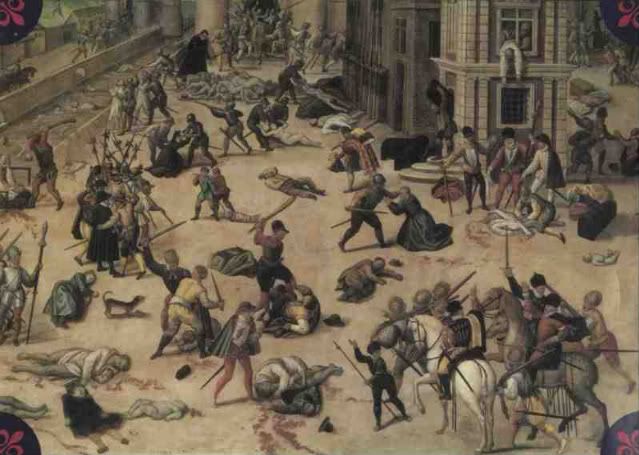
The reason I picked up the Bakewell book, besides serving as an easier way into the thousand pages of the Essays, is because she reminds us that Montaigne's central question is how to live. I often talk about how we have let serious discussion of the good life lapse. That discussion is very much present in the Essays.

He is endlessly curious about other people.

Moral dilemmas interested Montaigne, but he was less interested in what people ought to do than in what they actually did. He wanted to know how to live a good life—meaning a correct or honorable life, but also a fully human, satisfying, flourishing one. This question drove him both to write and to read, for he was curious about all human lives, past and present. He wondered constantly about the emotions and motives behind what people did. And since he was the example closest to hand of a human going about its business, he wondered just as much about himself.

Reason, for Montaigne, cannot be relied upon, because it is still inevitably human reason. Things must be seen as intrinsically uncertain and provisional.

Skepticism guided him at work, in his home life, and in his writing. The Essays are suffused with it: he filled his pages with words such as “perhaps,” “to some extent,” “I think,” “It seems to me,” and so on—words which, as Montaigne said himself, “soften and moderate the rashness of our propositions,” and which embody what the critic Hugo Friedrich has called his philosophy of “unassumingness.” They are not extra flourishes; they are Montaigne’s thought, at its purest. He never tired of such thinking, or of boggling his own mind by contemplating the millions of lives that had been lived through history and the impossibility of knowing the truth about them.

He is a fox to the core, suspicious of systems. Bakewell brings out the context for Montaigne's humane skepticism about the fallibility of human capacities and the mind: the appalling violence and cruelty and bigotry that tore France apart in his lifetime.

There was a tiredness and a sourness in Montaigne’s generation, along with a rebellious new form of creativity. If they were cynical, it is easy to see why: they had to watch the ideals that had guided their upbringing turn into a grim joke. The Reformation, hailed by some earlier thinkers as a blast of fresh air beneficial even to the Church itself, became a war and threatened to ruin civilized society. Renaissance principles of beauty, poise, clarity, and intelligence dissolved into violence, cruelty, and extremist theology.

Protestants and Catholics massacred each other and demobilized soldiers roamed the countryside stealing and killing.


This is not directly visible in the Essays, on the whole; but the general sensibility of awareness of human fallibility and search for equilibrium must be a reaction to the turbulent horror of the times.

The answer is, in part, to be sensitive to different angles of view. The wise do not just accept their surrounding assumptions.

Instead of accepting what they are born into, they acquire the art of slipping out of it and seeing everything from a different angle—a trick Montaigne, in the Essays, would make his characteristic mode of thinking and writing. Alas, there are usually too few of these free spirits to do any good. They do not work together, but live “alone in their imaginings.”

I find this very congenial, as aspect-seeing or different ways of seeing is something that fascinates me. The world's problems are generally not so much a lack of theoretical or academic understanding, as failure to perceive what is there. Blind spots bring us to disaster. Virtue is in essence a way of seeing, too.

Incidentally, this humility about reason, although seemingly so modern, is also in direct contradiction to some of our other contemporary ideas - such as Steven Pinker's argument that the "escalator of reason" makes war and cruelty less acceptable and likely. Montaigne would disagree.

Skepticism and ataraxia

However, more of Montaigne's outlook is explained by his desire for detachment and equilbrium: an attitude which is not so much modern as rooted in the classical world. Bakewell has a fascinating discussion of the origins of Montaigne's attitude in Hellenic and Roman philosophy. His generation was steeped in the classics. Indeed, Montaigne was elaborately educated with Latin as his native language and did not learn French until age six.

Epicureanism, Stoicism and Pyrrhonic skepticism shared some features, she says.

They also agreed that the best path to eudaimonia was ataraxia, which might be rendered as “imperturbability” or “freedom from anxiety.” Ataraxia means equilibrium: the art of maintaining an even keel, so that you neither exult when things go well nor plunge into despair when they go awry. To attain it is to have control over your emotions, so that you are not battered and dragged about by them like a bone fought over by a pack of dogs. It was on the question of how to acquire such equanimity that the philosophies began to diverge.

Stoics and Epicureans shared a great deal of their theory, too. They thought that the ability to enjoy life is thwarted by two big weaknesses: lack of control over emotions, and a tendency to pay too little attention to the present. If one could only get these two things right—controlling and paying attention—most other problems would take care of themselves.

This is a very interesting idea. Change of perspective is fundamental to the approach.

The key is to cultivate mindfulness: prosoche, another key Greek term. Mindful attention is the trick that underlies many of the other tricks. It is a call to attend to the inner world—and thus also to the outer world, for uncontrolled emotion blurs reality as tears blur a view. Anyone who clears their vision and lives in full awareness of the world as it is, Seneca says, can never be bored with life.

And proper control and attention means appropriate response.

Whatever happens, however unforeseen it is, you should be able to respond in a precisely suitable way. This is why, for Montaigne, learning to live “appropriately” (à propos) is the “great and glorious masterpiece” of human life. Stoics and Epicureans alike approached this goal mainly through rehearsal and meditation. Like tennis players practicing volleys and smashes for hours, they used rehearsal to carve grooves of habit, down which their minds would run as naturally as water down a river bed. It is a form of self-hypnotism. The great Stoic Roman emperor Marcus Aurelius kept notebooks in which he would go over the changes of perspective he wished to drill into himself.

It was not much fun.

Stoics were especially keen on pitiless mental rehearsals of all the things they dreaded most.

I haven't been that familiar with this background. Ataraxia is a conception of the good life which is especially attractive in exhausted, troubled times. The good life is sometimes, as Voltaire later said, cultivating one's own garden.

But it is also a rather passive and defeatist conception, even if it is understandable in times of civil war or immense suffering. The original arête of the fifth and fourth century Greeks declined into detachment and activity turned into passivity. If it is reminiscent of Eastern philosophy, Bakewell says, it may be because it reflected contact with the East following Alexander's conquests .

Stoicism and its variants is a thin philosphy, and a little inhumanly austere. All the same, I'm now reading Seneca's Letters from a Stoic.

However, it is worth emphasizing it was not Stoicism that survived the Roman world, but Christianity. Christianity has aspects of detachment and "turn the other cheek" as well, of course, but it also offers hope.

That makes me think; one major argument against virtue ethics is that it is a doctrine for the aristocratic few. But it does not have to be austere. Flourising ought to be more than cultivating imperturbability. The doctrine of the golden mean is somewhat lost. Temperance does not imply renunciation. There has to be positive content to eudaimonia and flourising, freedom to as well as freedom from.


Leisure

Another issue which Montaigne ponders is how to make use of leisure, which is an increasingly important question as more and more basic work becomes automated. How to avoid being bored is increasingly one of the main questions of our age. And much of our answer in recent decades has been passive: television.

Montaigne chose to withdraw from public life in Bordeaux as he reached his early forties, and retired to a tower in his estate in the countryside.


He was later voted Mayor of the City in his absence on a trip to Italy, but never sought the public spotlight.


Seneca, in advising retirement, had also warned of dangers. In a dialogue called “On Tranquillity of Mind,” he wrote that idleness and isolation could bring to the fore all the consequences of having lived life in the wrong way, consequences that people usually avoided by keeping busy—that is, by continuing to live life in the wrong way. The symptoms could include dissatisfaction, self-loathing, fear, indecisiveness, lethargy, and melancholy. Giving up work brings out spiritual ills, especially if one then gets the habit of reading too many books—or, worse, laying out the books for show and gloating over the view.

Right at the beginning of the blog, we noted Keynes's discussion of the bored upper-middle class housewives as a warning sign of what will happen if the "economic problem" is solved. As Keynes argued:

To use the language of to-day-must we not expect a general “nervous breakdown”? We already have a little experience of what I mean -a nervous breakdown of the sort which is already common enough in England and the United States amongst the wives of the well-to-do classes, unfortunate women, many of them, who have been deprived by their wealth of their traditional tasks and occupations--who cannot find it sufficiently amusing, when deprived of the spur of economic necessity, to cook and clean and mend, yet are quite unable to find anything more amusing.

To those who sweat for their daily bread leisure is a longed--for sweet-until they get it.

The interesting thing is these problems are not new. They have affected the aristocratic few, the wealthy, through much of history.

In the early 1570s, during his shift of values, Montaigne seems to have suffered exactly the existential crisis Seneca warned of. He had work to do, but less of it than he was used to. The inactivity generated strange thoughts and a “melancholy humor” which was out of character for him.

And the answer? Mindfulness: curiosity and attentiveness.

Seneca would have approved. If you become depressed or bored in your retirement, he advised, just look around you and interest yourself in the variety and sublimity of things. Salvation lies in paying full attention to nature. Montaigne tried to do this, but he took “nature” primarily to mean the natural phenomenon that lay closest to hand: himself.

Withdrawal - a "room at the back of the shop" - is attractive but surely cannot be the whole answer, however. Engagement must be part of the good life: purpose as well as endurance.

Yet it is a vision that often recurs, from the Roman aristocrat in his villa far from the imperial court to the Chinese official retired to his pavillion in the deep mountains.

Perhaps the most disturbing possibility is we do not ultimately want to be happy.

He knew, all the same, that human nature does not always conform to this wisdom. Alongside the wish to be happy, emotionally at peace and in full command of one’s faculties, something else drives people periodically to smash their achievements to pieces. It is what Freud called the thanatos principle: the drive towards death and chaos. The twentieth-century author Rebecca West described it thus: Only part of us is sane: only part of us loves pleasure and the longer day of happiness, wants to live to our nineties and die in peace, in a house that we built, that shall shelter those who come after us. The other half of us is nearly mad. It prefers the disagreeable to the agreeable, loves pain and its darker night despair, and wants to die in a catastrophe that will set back life to its beginnings and leave nothing of our house save its blackened foundations. West and Freud both had experience of war, and so did Montaigne: he could hardly fail to notice this side of humanity. His passages about moderation and mediocrity must be read with one eye always to the French civil wars, in which transcendental extremism brought about subhuman cruelties on an overwhelming scale.

And perhaps that brings us back to the issue of coexistence. It is a noble thing to avoid suffering and war. It is necessary but not sufficient for the good life. But tempering fanaticism and zealotry is a better way to get along than imposing universal rules of neutrality, or retreating to one's garden.


Monday, October 1, 2012

Ends and life-chances

Eric Hobsbawm, the famous British Marxist historian, just died. The Guardian reprinted a piece of his from 2009.

But a progressive policy needs more than just a bigger break with the economic and moral assumptions of the past 30 years. It needs a return to the conviction that economic growth and the affluence it brings is a means and not an end. The end is what it does to the lives, life-chances and hopes of people. Look at London. Of course it matters to all of us that London's economy flourishes. But the test of the enormous wealth generated in patches of the capital is not that it contributed 20%-30% to Britain's GDP but how it affects the lives of the millions who live and work there. What kind of lives are available to them? Can they afford to live there? If they can't, it is not compensation that London is also a paradise for the ultra-rich. Can they get decently paid jobs or jobs at all? If they can't, don't brag about all those Michelin-starred restaurants and their self-dramatising chefs. Or schooling for children? Inadequate schools are not offset by the fact that London universities could field a football team of Nobel prize winners.

The test of a progressive policy is not private but public, not just rising income and consumption for individuals, but widening the opportunities and what Amartya Sen calls the "capabilities" of all through collective action. But that means, it must mean, public non-profit initiative, even if only in redistributing private accumulation. Public decisions aimed at collective social improvement from which all human lives should gain. That is the basis of progressive policy - not maximising economic growth and personal incomes. Nowhere will this be more important than in tackling the greatest problem facing us this century, the environmental crisis. Whatever ideological logo we choose for it, it will mean a major shift away from the free market and towards public action, a bigger shift than the British government has yet envisaged. And, given the acuteness of the economic crisis, probably a fairly rapid shift. Time is not on our side.

He is of course right that the main point ought to be "The end is what it does to the lives, life-chances and hopes of people." Economic growth is only a means to an end.

In practice, of course, Hobsbawn was sympathetic with regimes that mostly destroyed life-chances, and indeed lives. Judged in terms of consequences, progressive policy often accomplishes the opposite of what it intends or officially advocates. Lenin offered "Peace, Land, Bread". Russia got civil war and expropriation and famine.

But what this ought to tell us is that if you pretend to be neutral about ways of life, by default you are allowing other people to set the terms of the conversation. You still will have a consequential version of the good life even if you do not intend it.

There is no reason at all why a more concrete focus on the kind of life available to people ought to entail massive shifts towards government. But if all the right has to counter it is a libertarian Ayn Rand utopia, or ignoring the matter altogether, it only makes turgid back-to-the-1970s outcomes it more likely. Romney's libertarian approach is very unconvincing. Arguing about market v government, as this election campaign seems to circling around, is stale and outdated.

We need a more concrete discussion about the good life - the kind of lives we want in practice, the kind of lives we want GDP to buy us. Of course, people will not agree on every detail. But psychology tells us they is more commanality in what people want out of daily life than we usually believe.