Showing posts with label Happiness. Show all posts

Tuesday, February 18, 2014

How self-actualization can produce all-or-nothing marriages

This is an interesting article in the NYT about the evolution of marriage. It argues marriage has changed in the last two hundred years as western societies have moved up Maslow's hierarchy of needs.

Our central claim is that Americans today have elevated their expectations of marriage and can in fact achieve an unprecedentedly high level of marital quality — but only if they are able to invest a great deal of time and energy in their partnership. If they are not able to do so, their marriage will likely fall short of these new expectations. Indeed, it will fall further short of people’s expectations than at any time in the past.

There have been three stages in marriage, according to author Eli Finkel. "Institutional" marriage, until about 1850, was largely a matter of mutual survival - food, shelter, and protection from violence. "Companionate" marriage, from 1850 to 1965, was more about love and companionship and intimacy, once the more basic needs were secure. And then,

Since around 1965, we have been living in the era of the self-expressive marriage. Americans now look to marriage increasingly for self-discovery, self-esteem and personal growth. Fueled by the countercultural currents of the 1960s, they have come to view marriage less as an essential institution and more as an elective means of achieving personal fulfillment.

But this has led to an all-or-nothing phenomenon.

HERE lie both the great successes and great disappointments of modern marriage. Those individuals who can invest enough time and energy in their partnership are seeing unprecedented benefits. The sociologists Jeffrey Dew and W. Bradford Wilcox have demonstrated that spouses who spent “time alone with each other, talking, or sharing an activity” at least once per week were 3.5 times more likely to be very happy in their marriage than spouses who did so less frequently. ...But on average Americans are investing less in their marriages — to the detriment of those relationships.

And so this leads to two very interesting points. At the higher levels of the hierarchy of needs, time and personal energy are much more important than before. And when it comes to self-actualization and self-expression, people's expectations matter more as well - perhaps especially when they become unrealistic or foolish. What can people do to improve theie marriages?

First and foremost, couples can choose to invest more time and energy in their marriage, perhaps by altering how they use whatever shared leisure time is available. But if couples lack the time and energy, they might consider adjusting their expectations, perhaps by focusing on cultivating an affectionate bond without trying to facilitate each other’s self-actualization.

There's perhaps wider lessons to be drawn from this. G remarked the other day that one problem with the Millenials is they have extremely high expectations of life, and then feel all the more crushed or resentful when they encounter resistance.

On one level, that story is as old as time. But it is almost a general truth that improvement often leads to turbulence and conflict and even violence because expectations have a tendency to rise faster than realization - which then produces frustration and anger. A rising Germany produced carnage in 19th and 20th century Europe. American cities burnt in riots mostly after the Civil Rights Act passed in 1964. Many developing countries like Egypt have increasingly educated youth but few jobs or positions for them.

Improvement very often produces accelerated expectations. So it means we ought to pay very close attention to how expectations change over time, rather than simply immediate income levels or distribution of income. So far as I know, there is very little data that tracks those kind of assumptions or expectations, beyond very basic things like whether people expect to earn more than their parents. It isn't a matter just of expected income, or short-term economic confidence. What kind of opportunities do people think they will have? How much security do they think they will enjoy? It must be as related to education as to current economic circumstances. It also must come from medi models How quickly and why do people scale back expectations?

This also relates to the evolution of ideas about the good life - something which I will come back to. But one clear conclusion here is, once again, the diminishing marginal utility of money at higher levels of needs. It is mainly time that needs to be invested in pursuit of happiness here, not dollars. In fact, earning more dollars actually takes away from time spent together.

This is the root of the deeper problems with the modern economy, which I've talked about a great deal before. Markets are extremely efficient at producing excludable rivalrous nonpositional goods, like croissants or cars. But if the things we increasingly want are not subject to definable property rights or depend largely on other people's behavior, like honor or reputation, then the goods we want increasingly lie outside the market sphere. That's not a criticism of markets, any more than you actively criticize a Ferrari because it can't fly. It's just a fact you can't really define a contractual tradable right to a happy marriage.

The article also represents a much more binary vision of outcomes, although it's not entirely clear why this should be seen as inevitable. As society rises up the levels of Maslow's hierarchy, does it mean that this all-or-nothing phenomenon will become more typical in other areas too? Or does it simply mean we need a rethink of use of time and it how it is related to happiness? To what extent to do people who fail to onvest enough time or energy in a relationship do so out of choice? There are certainly plenty of anecdotal stories of people who spend more time at the office to avoid spending time at home, or those who are compelled to stay in the office to keep their job.

Overall, it's a very interesting illustration of how core structures in our society, like marriage, are affected by the evolution of what people want and need as basic survival needs are taken care of.


Sunday, May 19, 2013

The Prevalence of Loneliness

This, from an article in the New Republic, is an indicator that things are not going well in society. How truly amazing and sad.

... even among the not-so-old, loneliness is pervasive. In a survey published by the AARP in 2010, slightly more than one out of three adults 45 and over reported being chronically lonely (meaning they’ve been lonely for a long time). A decade earlier, only one out of five said that. With baby-boomers reaching retirement age at a rate of 10,000 a day, the number of lonely Americans will surely spike.

I've talked before how we overlook the importance of connection and the experience of the texture of daily lived life, as if we need a "gross national loneliness" to set against GDP.


Sunday, April 14, 2013

People are just not that motivated by money alone

Here's an interesting blog post on the Harvard Business Review site on how money and motivation are related: they're not.

The results indicate that the association between salary and job satisfaction is very weak. The reported correlation (r = .14) indicates that there is less than 2% overlap between pay and job satisfaction levels. Furthermore, the correlation between pay and pay satisfaction was only marginally higher (r = .22 or 4.8% overlap), indicating that people's satisfaction with their salary is mostly independent of their actual salary.

In addition, a cross-cultural comparison revealed that the relationship of pay with both job and pay satisfaction is pretty much the same everywhere (for example, there are no significant differences between the U.S., India, Australia, Britain, and Taiwan).

It puts a little more solid evidence around the argument that is made in books like Daniel Pink's Drive: The Surprising Truth About What Motivates Us.


Tuesday, January 15, 2013

Abundance and Self-Realization

I'm looking at Robert Fogel's The Fourth Great Awakening and the Future of Egalitarianism, starting here.

Distribution of income matters less than distributiion of "spiritual resources", he says. That means there is a tendency in the "Fourth Awakening" to refocus on the individual again, rather than material conditions in society as a whole.

I have often talked about abundance on this blog, such as here and here. Fogel also emphasizes the saturation of material goods.

Our society is so well saturated with consumer durables, in fact, that even the poorest fifth of households are well-endowed with them. Consequently, the era of the household accumulation of consumer durables, which sparked the growth of many manufacturing industries in the many decades following World War II, is largely over in the United States. p189

So where are things going? Meaning becomes more important as survival challenges recede.

Today, people are increasingly concerned with what life is all about. That was not an issue for the ordinary individual in 1880, when nearly the whole day was devoted to earning the food, clothing and shelter needed to sustain life. A half century from now, perhaps even sooner, when increases in productivity make it possible to provide goods in abundance with half today's labor, the issue of life's meaning, and other matters of self-realization, will take up the bulk of discretionary time. p 191-192

Health and leisure time will be the focus of the future economy, although, he says, it is difficult to foresee the details.

The point is that leisure-time activities (including lifelong learning) - volwork - and health care are the growth industries of the late twentieth century and the early twenty-firsty. They will spark economic expansion during our age, just as agriculture did in the eighteenth century and the early nineteenth and as manufacturing, transportation and utilities didin the late nineteenth century and much of the twentieth. The growing demand for health-care services is due primarily, not to a distortion of the price system, but to the increasing effectiveness of medical intervention. p201

What does self-realization mean? Interestingly, Maslow is not mentioned at all, nor are the older classical ideas about virtue in any detail. Instead, Fogel develops his own list.

To those philosophers who have developed the concept, self-realization means the fullest development of the virtuous aspects of one's nature. ..Of all the maldistributed spiritual resources, sense of purpose may be the most important. p205

Others include "a vision of opportunity", "a sense of the mainstream of work and life" which means a sense of where opportunities are and how to pursue them. There must be "a sense of community", an "ability to engage with diverse groups", which entails an "ethic of benevolence". As self-realization is often achieved through an occupation, a "work ethic" and "sense of discipline" are required, as well focus and a "capacity to resist the lure of hedonism". There needs to be a "capacity for self-education", a "thirst for knowledge". an "appreciation of quality", and some "self-esteem." p205-206

To this updated list of virtues he adds a sense of balance or, as Aristotle would put it, the golden mean.

Each of the fifteen spiritual resources just outlined must be possessed in moderation. There is an optimal amount of each spiritual resource, which will vary from one individual to another. Too much of a sense of purpose turns dedication into ruthlessness. Too little sense of purpose may cause one to be uncompetitive in a given pursuit. p207

It isn't quite a virtue ethics, perhaps, as it is more a list of desirable psychological attributes, being well-adjusted rather than arete or excellence. But it comes close. It is not utilitarian, nor based on more simplistic ideas about happiness. It is certainly reconcilable with older virtues such as courage or temperance or practical wisdom. It is also reconcilable with other ideas we have looked at, such as the evolution of the economy from manufacturing to services to experiences to, finally, transformation of individuals, or the requirements for individual flourishing.

What it does not do (and no book can do everything) is explain what happens to labor markets and economic incentives when material needs are saturated. How might a post-scarcity economy work? How will people make a living?

In all, it is quite a radical book for an academic economist. It is also politically quite eclectic - egalitarian, but taking religion seriously; interested in the condition of the poor but skeptical of government intervention. It asks the right questions, even if the answers are not wholly developed.

The basic conclusion is income is no longer a suitable end-point for policy discussions. Nor are national income statistics. Like the rich sons of Athens two thousand years ago, the nature of the good life is the main question that confronts us once material needs are saturated. Even some Nobel Prizewinners in Economics can see that.


Sunday, January 13, 2013

Happiness versus Meaning

Here's an interesting article in the Atlantic. New research confirms what Victor Frankl famously wrote about following his experience in Nazi concentration camps: a sense of purpose is deeply necessary to people, even more so than immediate happiness.

Research has shown that having purpose and meaning in life increases overall well-being and life satisfaction, improves mental and physical health, enhances resiliency, enhances self-esteem, and decreases the chances of depression. On top of that, the single-minded pursuit of happiness is ironically leaving people less happy, according to recent research. "It is the very pursuit of happiness," Frankl knew, "that thwarts happiness."

This is why some researchers are cautioning against the pursuit of mere happiness. In a new study, which will be published this year in a forthcoming issue of the Journal of Positive Psychology, psychological scientists asked nearly 400 Americans aged 18 to 78 whether they thought their lives were meaningful and/or happy. Examining their self-reported attitudes toward meaning, happiness, and many other variables -- like stress levels, spending patterns, and having children -- over a month-long period, the researchers found that a meaningful life and happy life overlap in certain ways, but are ultimately very different. Leading a happy life, the psychologists found, is associated with being a "taker" while leading a meaningful life corresponds with being a "giver."

"Happiness without meaning characterizes a relatively shallow, self-absorbed or even selfish life, in which things go well, needs and desire are easily satisfied, and difficult or taxing entanglements are avoided," the authors write.

How do the happy life and the meaningful life differ? Happiness, they found, is about feeling good. Specifically, the researchers found that people who are happy tend to think that life is easy, they are in good physical health, and they are able to buy the things that they need and want. While not having enough money decreases how happy and meaningful you consider your life to be, it has a much greater impact on happiness. The happy life is also defined by a lack of stress or worry.

Most importantly from a social perspective, the pursuit of happiness is associated with selfish behavior -- being, as mentioned, a "taker" rather than a "giver."

People want to contribute to something.

Baumeister and his colleagues would agree that the pursuit of meaning is what makes human beings uniquely human. By putting aside our selfish interests to serve someone or something larger than ourselves -- by devoting our lives to "giving" rather than "taking" -- we are not only expressing our fundamental humanity, but are also acknowledging that that there is more to the good life than the pursuit of simple happiness.

It's worth reading the whole article.


Saturday, December 29, 2012

The Later Matisse

I've been reading the second volume of Hilary Spurling's biography of Henri Matisse: Matisse the Master: A Life of Henri Matisse: The Conquest of Colour, 1909-1954. I enjoyed the first one last year.

It is a good read. It is naturally a very different story to the first one, which is in essence about his struggles to get established and the initial fauvist radical break with the past. The first book is a bildungsroman about finding one's place in the world. This volume in contrast shows an established artist, dealing with collectors and coping with family problems, travelling to Morocco and Moscow and Tahiti, and contributing to exhibitions.

The most striking thing is not the discussion of his evolution as an artist. That is perhaps submerged beneath too much quotidian detail about his trips to Tangier, garden at Issy or apartments in Nice. For deeper insight into his art, I think I will have to return to Pierre Schneider's massive Matisse and finish it.

Instead, the beating center of this book is the human drama of the impact of both world wars on his life. He had to flee from a deserted Paris in the First World War, his mother and other family trapped in Bohain behind enemy lines. He expected an Italian fascist seizure of Nice in the Second World War. His daughter Marguerite was tortured by the Nazis and narrowly escaped with her life. Sometimes it is easier to understand large events by their smaller impacts.

What is also clear is that Matisse's obsessive dedication to "true painting" caused endless strife for himself and his family. He might have led a successful life, with immense fame and a lasting legacy. He had a happy marriage for forty years, which was much envied by other painters. He led an orderly bourgeois existence in terms of work habits, rather than sinking into dissipation or poverty.

But so much of his life was filled with sleeplessness and anxiety and enormous agonizing over his work. Great talent sometimes comes with great flaws and great pain. The Parisian critics dismissed him as a outdated painter of saccharine odalisques from the 1920s on, and some of his most important work was hidden in the USSR for decades. The late work, including the famous cut-outs , took time to be appreciated. The French state mostly ignored his work, and he did not receive large decorative commissions as he hoped after the famous Barnes murals.

 
Lydia
 

I am also still a little puzzled by his split with his wife Amelie late in life. Amelie grew increasingly resentful of his reliance on model Lydia Delectorskaya. Spurling insists Matisse was never sexually involved with his models. And certainly working for him gave a purpose to the exiled Russian. But something doesn't ring true here.

Still, now is the time to see the superb Matisse exhibition at the Met. The paintings are luminously brilliant. They stand quite apart from any biographical details.


Friday, November 30, 2012

Welfare and the Good Life


We're looking at Charles Murray's Coming Apart: The State of White America, 1960-2010, starting here.

Against the European Welfare model

The connection between the four basic social institutions and happiness leads Murray to argue for American exceptionalism, as against the European welfare model.

The tacit assumption of the advanced welfare state is correct when human beings face starvation or death by exposure. Then, food and shelter are all that count. But in an advanced society, the needs for food and shelter can be met in a variety of ways, and at that point human needs can no longer be disaggregated. The ways in which food and shelter are obtained affects whether the other human needs are met.

People need self-respect, but self-respect must be earned—it cannot be self-respect if it’s not earned—and the only way to earn anything is to achieve it in the face of the possibility of failing.

This is of course a version of what I have talked about before, a change in needs as we rise up Maslow's hierarchy. The welfare state ramified in the 1960s as one response to abundance. Given sufficient wealth, the main political drive has been towards equal distribution rather than new flourishing and possibility.

Upper class people still generally practice these four institutional virtues, he says. They are much more likely to be married, see a job as a calling and work hard, practice religion, and believe others can be trusted. In a sense, getting ahead requires them.

The new upper class still does a good job of practicing some of the virtues, but it no longer preaches them. It has lost self-confidence in the rightness of its own customs and values, and preaches nonjudgmentalism instead.

He thinks this view, nonjudgemental "niceness", is living on borrowed time, however, as science produces more results which refute it.

Here are some more examples of things I think the neuroscientists and geneticists will prove over the next few decades: Human beings enjoy themselves when they are exercising their realized capabilities at the limit of those capabilities. Challenge and responsibility for consequences is an indispensable part of human motivation to exercise their realized capabilities at the limit of those capabilities. People grouped by gender, ethnicity, age, social class, and sexual preference, left free to live their lives as they see fit, will produce group differences in outcomes, because they differ genetically in their cognitive, psychological, and physiological profiles. Regardless of whether people have free will, human flourishing requires that they live in an environment in which they are treated as if they did.

So he thinks it will become obvious that nonjudgemental welfarism will be understood to undermine the crucial institutions of society.

The institutions surrounding marriage, vocation, community, and faith will be found to be the critical resources through which human beings lead satisfying lives. It will be found that those institutions deteriorate in the advanced welfare states for reasons that are intrinsic to the nature of the welfare state. It will be found that those institutions are richest and most robust in states that allow people to work out their lives on their own and in company with the people around them.

Putting it together

So what do we make of this? As a rule I consider libertarianism a horrible mistake. But Murray is a strange kind of libertarian. He is not so much arguing for the market and voluntary Ayn Randian contractualism, as strengthened independent social institutions.

He calls for an emphasis on virtue, which I like, but it in practice he means strengthening his four core institutions rather than the Aristotelian virtues as such. It is sociology more than ethics. He does not have much of the rest of virtue ethics, such as the golden mean, or an emphasis on the multiplicity of virtues.

What he does have is a kind of sociological vision of the good life, of flourishing, which I think makes him divergent from full libertarianism. Flourishing for him means strengthening those four institutions and reducing the role of government and bureaucracy in life.

I think this is what my friend, who I mentioned at the beginning of the post, was hostile to. Murray says people have to make their own choices in life, but his view is much less sympathetic for radical innovation in lifestyles. He believes in marriage, in standard jobs, in the churches, in stability.

But there is a basic confusion here. People do not work out their lives on their own, or even just in the company of those around them. They do so in the context of an ethical vision of the good life, of what contributes to happiness. We do not start off from year zero every time we make a decision.

Government and bureaucracy cannot run our lives for us. That much is true. But we still need a conception of the common good. Traditional libertarianism does not do that. It is just about process. Murray's distaste for government means he throws much of the possibility of common culture out as well.

I've said a number of times I think the debate between government and the market is a stale 20th century debate. Instead, the real issue is what we do about abundance and what flourishing means. Murray contributes some hard statistical evidence to that question, about the value of social institutions. But it correlation, rather than explanation.

It is a good argument against welfarist government. But it does not make any case for the positive possibilities of abundance, or how institutions need to adapt. What becomes of work if the demand for medium-skilled jobs is being hollowed out, for example? How do you promote social trust?

America is about new possibilities of freedom - and what that means substantively when material necessities are met.


Thursday, November 29, 2012

Virtue and the Founders

We're looking at Charles Murray's Coming Apart: The State of White America, 1960-2010, starting here.

Murray argues that mainstream America is seeing crucial social institutions erode. He gives a fascinating account of how the founders of the United States were convinced that the bedrock of the Republic was the virtue of the people. Naturally, I found this illuminating because of my continued interest in virtue ethics, like this post the other day. According to Murray,

Everyone involved in the creation of the United States knew that its success depended on virtue in its citizenry—not gentility, but virtue. “No theoretical checks, no form of government can render us secure,” James Madison famously observed at the Virginia ratifying convention. “To suppose that any form of government will secure liberty or happiness without any virtue in the people is a chimerical idea.”

For Benjamin Franklin, this meant that “only a virtuous people are capable of freedom. As nations become more corrupt and vicious, they have more need of masters.” On the other hand, virtue makes government easy to sustain: “The expense of our civil government we have always borne, and can easily bear, because it is small. A virtuous and laborious people may be cheaply governed.”

Washington emphasized the point too:

George Washington said much the same thing in the undelivered version of his first inaugural address, asserting that “no Wall of words, no mound of parchment can be formed as to stand against the sweeping torrent of boundless ambition on the one side, aided by the sapping current of corrupted morals on the other.” Or as he put it most simply in his Farewell Address: “Virtue or morality is a necessary spring of popular government.” In their various ways, the founders recognized that if a society is to remain free, self-government refers first of all to individual citizens governing their own behavior.

This shows, of course, how natural and widespread and unexceptional a belief in the virtues was before the utilitarian 19th century.

Now Murray believes virtue is eroding.

The success of America depended on virtue in the people when the country began and it still does in the twenty-first century. America will remain exceptional only to the extent that its people embody the same qualities that made it work for the first two centuries of its existence. The founding virtues are central to that kind of citizenry.


Four key institutions

He spends much of the rest of the book distingushing between the mores of an upper class suburb, which he calls Belmont, and a lower class one, Fishtown. The four core institutions of society - marriage, work, religion, and social trust - have all eroded markedly in Fishtown, he says. Marriage has declined:

For the first time in human history, we now have societies in which a group consisting of a lone woman and her offspring is not considered to be sociologically incomplete—not considered to be illegitimate—and so I will adapt and call them nonmarital births.

So too has the work ethic. One interesting thing is he emphasises work as a vocation, a calling, rather than just a means to pay the bills. He thinks that even low-paying work can give meaning if it helps support others.

Yes, you can overdo it. There is more to life than work, and a life without ample space for family and friends is incomplete. But this much should not be controversial: Vocation—one’s calling in life—plays a large role in defining the meaning of that life. For some, the nurturing of children is the vocation. For some, an avocation or a cause can become an all-absorbing source of satisfaction, with the job a means of paying the bills and nothing more. But for many others, vocation takes the form of the work one does for a living.

The data shows lower-class neighnborhoods have changed much more than upper-class ones.

In 1960, 81 percent of Fishtown households had someone working at least forty hours a week, with Belmont at 90 percent. By 2008, Belmont had barely changed at all, at 87 percent, while Fishtown had dropped to 60 percent. And that was before the 2008 recession began. As of March 2010, Belmont was still at 87 percent. Fishtown was down to 53 percent.

Religious adherence - Catholicism in the case of Fishtown, which is based on an actual inner suburb in Philadelphia - has declined sharply.

The jury is still out on the metaquestion of whether secular democracies can long survive. But the last few decades have brought forth a large technical literature about the role of religion in maintaining civic life and the effects of religion on human functioning.

Social trust has also plunged.

The scariest message from the GSS [survey] does not consist of declines in specific activities that make up social capital, but this: The raw material that makes community even possible has diminished so much in Fishtown that the situation may be beyond retrieval. That raw material is social trust—not trust in a particular neighbor who happens to be your friend, but a generalized expectation that the people around you will do the right thing. As Francis Fukuyama documented in Trust: The Social Virtues and the Creation of Prosperity, the existence of social trust is a core explanation of why some cultures create wealth and other cultures are mired in poverty.

Diversity, for all its positive qualities, also erodes social trust.


Another problem regarding social trust, and one that may help explain the decline, has surfaced more recently: The key ingredient of social capital, social trust, is eroded by ethnic diversity. In the years after Bowling Alone appeared, Robert Putnam’s research led him to a disturbing finding: Ethnic diversity works against social trust within a community—not only against trusting people of the other ethnicity, but against trusting even neighbors of one’s own ethnic group. In addition, Putnam’s research found that in areas of greater ethnic diversity, there was lower confidence in local government, a lower sense of political efficacy, less likelihood of working on a community project, less likelihood of giving to charity, fewer close friends, and lower perceived quality of life.

The erosion of these institutions diminishes happiness. And there is a common notion of what happiness means, says Murray.


... the core nature of human happiness is widely agreed upon in the West. It goes all the way back to Aristotle’s views about happiness in the Nicomachean Ethics. Distilling his discussion of happiness into a short definition leaves out a lot, but this captures the sense of Aristotle’s argument well enough for our purposes: Happiness consists of lasting and justified satisfaction with life as a whole. The definition in effect says that when you decide how happy you are, you are thinking of aspects of your life that tend to define your life (not just bits and pieces of it); that you base your assessment of your happiness on deep satisfactions with the way things have gone, not passing pleasures; and that you believe in your heart of hearts that those satisfactions have been worth achieving. It is not really a controversial definition—try to imagine a definition of happiness you could apply to your own life that is much different.

There seems to be a strong connection in survey evidence between the strength of Murray's four core institutions and happiness.

At baseline—unmarried, dissatisfied with one’s work, professing no religion, and with very low social trust—the probability that a white person aged 30–49 responded “very happy” to the question about his life in general was only 10 percent. Having either a very satisfying job or a very happy marriage raised that percentage by almost equal amounts, to about 19 percent, with the effect of a very satisfying job being fractionally greater. Then came the big interaction effect: having a very satisfying job and a very happy marriage jumped the probability to 55 percent. Having high social trust pushed the percentage to 69 percent, and adding strong religious involvement raised the probability to 76 percent.

I'll conclude looking at the book tomorrow.


Sunday, November 25, 2012

Kant and Universalism

We've encountered plenty of criticism of Immanuel Kant on this blog before, and some support for the "escalator of reason" in which enlightenment ethics played a major part.

Clearly he is the axial figure, the pivot around which our modern conception of ethics shifted. We can trace much of the modem preoccupation with impartiality and universal rules as the bedrock of morality straight to him.

Looking at Kantian ethics hardly guarantees much readership for a blog - quite the opposite. But I keep finding on this blog that looking at the future path of the economy requires rethinking many of our ethical concepts. If we no longer have to worry about food, shelter and basic survival as our main preoccupations in life, then issues of the common good, the good life, happiness and flourishing all come to the fore.

And that means ethical philosophy becomes much more prominent in the discussion, rather than simply utility or macroeconomics. And that means we have to look, among other things, at Kant rather than the Kardashians.

I had read the classic Stephen Korner book on Kant years ago, but I noted a major recent biography in Deirdre McCloskey's references. So I read Manfred Kuehn's Kant: A Biography the other week ( while exiled to a place in Queens by the hurricane). It is well-written, tractable, and gives a deep evocation of Kant's times and context.

Of course, it does not break new ground in examining his philosophy itself, although it very much helps to get more sense of his evolution.

What really struck me is how much of Kant's early life and education was rooted in Lutheran theology and Pietist religious doctrine. Even in the eighteenth century, theology could have major consequences. Prussia tended to allow free intellectual speculation on metaphysics, although normal life was circumscribed. The relationship between reason and faith was a major issue of the age.

The limits of reason

I will leave most of the issues in the Critique of Pure Reason aside and focus on the ethics. But before I do, it is striking that Kant's metaphysics is all about demonstrating the boundaries and limits that apply to reason and experience; his ethics is all about entrenching pure reason with little regard to experience.

The driving force is certainty, and its limits.

Kant's critical philosophy can be viewed as an attempt to answer three fundamental questions of enduring philosophical significance: "What can I know", "What ought I to do?" and "What may I hope for". He may be said to address the first of these questions in the Critique of Pure Reason, but he does not answer the question. He seems to be primarily interested not in the general question of what we can know, but in the narrower question of what can be known with absolute certainty and without any qualification. In his terminology, this question is "What can we know a priori and in complete isolation from experience?" p242

He wants to demonstrate that absolute skepticism does not make sense. Experience must presuppose some a priori categories. As Kuehn puts it,

Science allows of continuous progress. This is not so for metaphysics. It has both limits and boundaries. In fact, Kant believes that metaphysics leads us necessarily towards boundaries. p260

In a sense, his aim was to save a place for moral certainty based on a priori reason, in the face of rationalist skepticism.

Kant's ultimate concerns were moral, and perhaps even religious. Accepting the validity of the empiricist approach to science and to the growth of knowledge, Kant wanted to save morality from becoming too naturalistic and too relativistic. He wanted to show that even in the absence of knowledge of absolute reality, morality has a claim on us that is itself absolute and incontrovertible. It is this moral claim that elevates us above the beasts. p 265

He wanted to use reason to save morality from reason, in effect. It is a defense of morality against the corrosion of skepticism, on the one hand, and dogmatic Pietist religious claims on the other, but it leaves a very thin morality. Too much territory is conceded.

Kant's Groundwork

Kuehn emphasis that Kant saw a good will as the only moral thing.

Indeed, a good will is the only thing that is good without any qualification. In order to explain what he means by a good will, Kant introduces a distinction between acting from duty and acting in accordance with duty. He apparently thought that duty is what a good will would will. p284

And it is wholly distinct from self interest or specific ends.

Thus, actions have moral worth only when done from duty. But this moral worth is not to be found in the purpose or goal that they are meant to attain. They have their moral worth only in the subjective principle of volition that they express. Kant calls this practical principle of volition the "maxim". As we have seen, maxims are general principles of action. p284

So here already we have the contemporary notion that intention matters to the exclusion of anything else, and strict separation from self-interest.

A pure moral philosophy deals with a pure will, that is, a will that has motives "that are represented completely a priori by reason alone" and not with human volition, which is characterized by empirically based motives. p285

Morality is a matter of pure reason, rather than the more concrete issues that lay in the domain of anthropology.

Kant, in other words, does not intend to deal with the everyday situations of moral agents. He deals, rather with an ideal of pure reason that is entirely a priori. This ideal, which he calls the categorical imperative, is not given in experience. p285-286

This requirement of disinterestedness is also at the root of his aesthetic theory.

.."the beautiful is what pleases in the mere estimate formed of it (consequently not by the intervention of any feeling of sense in accordance with a concept of the understanding). From this it follows immediately that it must please apart from all interest. p347

Indeed, one cannot help but naturally think there are parallels between Kant's purely rational autonomous agent and our more recent conception of homo economicus in economics.


Residual elements

He sees there are difficulties with this notion, however:


Indeed, Kant ends his book by emphasizing that " we do not.. comprehend the practical unconditional necessity of the moral imperative." We only "comprehend its incomprehensibility"... So morality for Kant is an enigma. .. That the "mere dignity of humanity as rational nature, without any other end or advantage to be attained from it - hence respect for a mere idea - is yet to serve as an inflexible precept of the will", is , Kant openly acknowledges, a paradox. True morality is an ideal yet to be instantiated in the world, but it is the only ideal worth striving for. This is in the end what his idealism amounts to. p 286

Interestingly, immediately after the Groundwork he wrote the Idea for a Universal History, which does of course have teleological elements.

So Kant argues for a teleological view of Nature by arguing that such a view is required for the progress of humanity. .. Such a regular progression would not be due to any rational process of humanity, but would have to be ascribed to Nature itself. [.]

To this end, Kant formulates in somewhat dogmatic fashion and with little defense nine propositions. The first maintains that all natural capacities of a creature are 'destined" to be fully developed sooner or later. If nature has a plan, then the plan must be fulfilled. In the second proposition, he claims that our reason is such that it can be developed only in the species, not in an individual. Our lives are too short to allow the latter ... Fourth, nature brings about the full development of our natural faculties by an antagonism within society. In the long run, this antagonism leads to a law-governed social order. Kant calls this the "unsocial sociability." Though people may not be able to bear one another many a time, they still seek the approval and respect of others.

This is a feature of his approach in general. Kant has not abandoned completely the older ideas of purpose, or, as we shall see, virtue. But he pushes them to the periphery of his system. They are ad-hoc add-ons. And as such they soon fall from sight altogether.

Whereas much of his theoretical work was concerned with showing that reason has much less power than had been assumed by his rationalistic predecessors, Kant's moral philosophy may be seen as an attempt to show that morality is the exclusive domain of reason. p312

In a similar displacement, morality requires us to believe in the existence of God, or so Kuehn summarizes Kant's view:

Without morality and God, we would be condemned to moral despair. Moral action should lead to greater good in this world, but it usually does not. Happiness and worthiness to be happy do not usually go together in this world. If we want to establish a connection between the two, we must assume they will be made to coincide by God in the long run. In this way, the notion of "God" and "immortaility" as prerequisites for the realization of the summum bonum or the highest good, make possible the moral enterprise for Kant, and therefore we must believe in their reality. p313

But God is a consequence of morality, not the other way around.

It is our autononomy that is the basis of the moral law, not God's commands or demands on us. p313

God, like purpose, still forms part of his system, but at the periphery. The trouble is these other elements - God, a belief in progress and teleology, a belief in the paradox of inflexible striving for a pure idea - are needed, even on his arguments, to make his theory join up and make sense in practice.


Kant and Virtue

One thing I found particularly interesting was Kuehn's account of how Kant saw the virtues. He was very influenced by Cicero.

There are large areas of agreement between Kant and Cicero. They both thought that ethics is based on reason and is opposed to impulse, and they both rejected hedonism. Cicero used such phrases as "conquered by pleasure" and "broken by desires" to describe actions that fall short of virtue and moral character, while Kant argued that only actions done from duty alone were moral, while any action motivated by pleasure was nonmoral. Both Cicero and Kant offer a duty-based theory of morality.

But, says Kuehn,

Though Cicero, like Kant, considered duty and virtue to be the fundamental concepts of morality, Cicero opted for a form of eudaimonism, which held that whatever is in accordance with duty will also turn out to be ultimately more pleasant than what is in contradiction to virtue.

Kant rejected Ciceronian notions of ethos or honor or the duties particular to a role or social position, although he was very familiar with it from his father's participation in Koenigsberg guilds. "Without honor, a member of a guild was nothing."

The grounds of moral obligation, Kant thinks, must not be found

in the nature of man nor in the circumstances in which a man is placed, but must be sought a priori in the concepts of pure reason... Ciceronian ethics that remain founded on common life, expressed by such concepts of honor (honestas) , faithfulness (fides) , fellowship (societas) and seemliness (decorum) is too superficial and unphilosophical for Kant. For this reason, Kant rejected not just Cicero but all those who were trying to derive a Ciceronian ethics. Moral duties cannot be derived from honor or honorableness in any way. p281

Honor, he thought, always involves an element of self-interest. He still allowed a role for character and virtue in his system, but largely in terms of strength of will in carrying out the claims of disinterested duty.

Kuehn quotes a very late Kant work, the Doctrine of Virtue.

(objectively), there is only one virtue (as moral strength of one's maxims); but in fact (subjectively) there is a multitude of virtues.. our self-knowledge can never adequately tell us whether it is complete [in being virtuous] or deficient. p401

Kant also believed duty was a clearer principle than happiness.

The concept of duty is "simpler, clearer, more comprehensible, and more natural" than any motive drawn from happiness. Maxims drawn from happiness are notoriously difficult to formulate and act on. Yet moral education had been based on such maxims until now. Kant went on to argue that this is what impeded moral progress, and this did not prove the old saw that moral theory could not work in practice. It would work, if only it were tried. p374

Kuehn summarizes, and then quotes Kant again :


The complete system of duties that Kant finally presents to us is a doctrine of virtue; what he ultimately aims at is a virtue-based ethics, one in which character plays a central role, and not some kind of constructivist moral system. The categorical imperative is intimately bound up with virtue.

Virtue is the strength of a human being's maxims in fulfilling his duty. Strength of any kind can be recognized only by the obstacles only by the obstacles it can overcome, and in this case the obstacles are natural inclinations.. and since it is man himself who puts these obstacles in the way of his maxims, virtue is not merely self-constraint.. but also a self-constraint in accordance with a principle of inner freedom, and so through the mere representation of one's duty in accordance with the moral law. p402

So virtue and character are boiled down to determination to pursue the one true principle of adhererence to univeral maxims. The plurality of life and multiplicity of different virtues are reduced down to one demand of reason. The shadow of other doctrines is still there, but only a shadow.

I think in the end Kant's aim is to defend morality against the possibility of radical doubt, which was seeping into the European consciousness. But is this really a sensible aim? In a plural world, with competing values and situations and contexts, there will always be some grounds for doubt or exceptions to universal moral principles. That is not to justify relativism. It is to say that no moral principles can be universal. Rules must sometimes be honored in the breach. Experience and knowledge of human nature must be a major part of our moral outlook. Things should not be neater than they can be.

Perhaps it is just an inherent inclination in many people that they crave clear principles to the detriment of reality, just as quant modellers prefer their econometrics to the messy business of qualitative reality.


Destroying the village in order to save it

So, in the end, Kant rejected social roles and position as a foundation for morality, including the elevation of the aristocracy, which was brave for his time. He believed he had retained character and virtue as central parts of his system. But they were relegated to just supporting roles for the central actor: universal rules dictated to us by our autonomous reason. There is no role for flourishing or happiness: only duty is moral. And nature has her own purposes which may be inscrutable to us.

He defended morality by ignoring most of the content and inherent judgement that underlies it. Impartiality replaced substance.

Kant spent many years lecturing on anthropology, i.e the more concrete elements of human nature, and devoted much effort to practical reason as well as pure reason in the Critiques. But he severed morality from forms of life, and human nature.

It is a magnificent system for hedgehogs, people who believe in explaining things in terms of one principle or model. It provides more determinate principles of action, stripped from particular circumstances.

But the dictates of reason themselves may allow little room for restraint or temperance or prudence or compassion or good judgment. In releasing ourselves from the circumstances of human life, we also release ourselves from the constraints and possibilities of humanity.


Tuesday, November 20, 2012

Aristotle: Virtue and Happiness

I'm going to conclude a series of posts about Aristotle's The Politics , which start here.


He warns again against simply doling out surplus, as in a welfare state - which apparently happened at the time, and notoriously so later in antiquity in the form of Roman bread and circuses.


On the other hand if revenues are available, one should not do what popular leaders today do - make a free distribution of the surplus. (When people get it, they want the same again: this sort of assistance to the poor is like the proverbial jug with a hole in it.) .. Every effort therefore must be made to perpetuate prosperity. And since that is to the advantage of the rich as well as the poor, all that accrues from the revenues should be collected into a single fund and distributed in block grants to those in need, if possible in lump sums large enough for the acquisition of a small piece of land, but if not, enough to start a business, or work in agriculture. p375

Independence is preferable to simply handing out revenues, he thinks. It is a timeless thought. Often we think we are the first generation to confront a problem, or we are wonderfully modern and sophisticated. But it is just as often because we don't know how often it has been confronted in the past. We forget lessons which were already manifest in 350 B.C.


A constitution needs a view of the most desirable life

However, he comes back to his main point. We have to know what the good life is to design political institutions to achieve it.

If we wish to investigate the best constitution appropriately, we must first decide what is the most desirable life; for if we do not know that, then the best constitution is also bound to elude us. p391

He believes that virtue is the precursor to prosperity and happiness.

Thus people suppose that it is sufficient to have a certain amount of virtue; but they set no limit to the pursuit of wealth, power , prosperty, reputation and the like. {But} it is not by means of external goods that men acquire and keep the virtues, but the other way around; and to live happily, whether men suppose it to consist in enjoyment or in virtue or in both, does in fact accrue more to those who are outstandingly well-equipped in character and intellect, and only moderately so in the possesion of externally-acquired goods. p392

Of course, one of the more difficult issues in life is that sometimes character and virtue are not rewarded, of course. Time and chance happen to everyone. But it is still probable that as a rule people who are prudent and temperate and courageous and honest will do better. Parents generally teach their children to be honest rather than lie, after all. And living happily has only a tenuous connection with wealth and material goods beyond a certain threshold, as we know from the Easterlin paradox.

So Aristotle may overstate the point when he says

Let this then be agreed upon at the start: to each man there comes just so much happiness as he has of virtue and of practical wisdom, and performs actions dependent thereon. p392

But we would like it to be true. And in the long run, on average, it probably is true - and, like Pascal's bet, it is probably better to act as if we believe it is true.


Defining the Good Life

So what's the good life, or the best life? Not asceticism or denial or honor/shame or material success.

For the present, let this be our fundamental basis: the life which is best for men, both separately, as individuals, and in the mass, as states, is the life which has virtue sufficiently supported by material resources to facilitate participation in the actions that virtue calls for. p393

Although this is open to all, some avenues attract the most ambitious.


Both in earlier and in modern times men most ambitious for virtue seem generally to have preferred these two kinds of life, the statesman's or the philosopher's. p395

We have to have some purpose, or target.

The well-being of all men depends on two things; one is the right choice of target, of the end to which actions should tend, the other lies in finding the actions that lead to that end. p427

Aristotle is very teleological, of course. I often complain about liberal neutrality. But there is a liberal teleological tradition as well, and a leftist one stemming from Marx and Hegel. The problem is the good life they aim at is a vague abstract equality without much substance.

I would add another element. We need a choice of target, if nothing else because the economy and society naturally evolve regardless of whether we choose to perceive it. We can and ought to at least choose the fitness and selection criteria for the kind of change we experience.

So was it worth looking in such detail at a classic work, from a world in which a trireme or a horsecart was high technology? Yes. While looking up the Easterlin reference above, I came across this previous quote from Deirdre McCloskey in this blog post:

The great economist Simon Kuznets, notes his student Richard Easterlin, believed that "the `givens' of economics- technology, tastes, and institutions- are the key actors in historical change, and hence most economic theory has, at best, only limited relevance to understanding long-term change.

The technology has changed since Aristotle's day, of course. But tastes and institutions are still the key actors which we need to understand in a much less superficial way than our own parochial view allows.

And that is why stepping far outside our own parochial view , right back to first principles at the origin of many of our conceptions about ethics and politics, can give us a fresh perspective on our current challenges.

Monday, November 12, 2012

Aristotle and the beginning of the Western tradition

With the election still reverberating in the air, it's a good time to get some longer perspective. I read Aristotle's The Politics (Classics) a few weeks so, but haven't talked about it yet. It is going to take at least a week to go through all the ramifications of this book.

Why read something two thousand years old?

Let me explain first of all how I was led to this. I started off this blog asking what had gone wrong with the economy. The answer, as I've gradually come to think, is we have a set of institutions and practices which are designed for scarcity, the oldest problem of mankind. But the basic things of life are now superabundant, at least in the West. We have more material stuff than we know what to do with. Our problem is not starvation, but obesity.

So we have solved the "economic problem", as Keynes called it. As we become more and more efficient and productive, the amount of labor devoted to the exchange economy - services as well as manufacturing - is plunging, just as agriculural employment did before in the nineteenth century. The economy is sputtering as a result.

Mainstream economists are confident that demand will simply shift to newer goods and services. But the nature of our wants and preferences are changing. Most mainstream economists are oblivious to this, because they take tastes and preferences as exogenous. The discipline ignores changing preferences by definition. It is a profound blind spot.

Many of the other things we want in life are changing, as we ascend what Maslow called the hierarchy of needs. The issue is that the things we increasingly want more of are not easily packaged and sold as excluable, non-rivalrous goods and services. They are not as suited to be as easily sold in the market, or delivered by the welfare state. It is difficult to establish clear property rights. (Ask the music or newspaper industries). Alternatively, as technology advances, the marginal cost of so many new goods and services is so low that (as in Facebook, or Google, or Flickr, or other paragons of the new economy) it is easier to give them away to the consumer.

Most of the value in the economy is now intangible, but we have been slow to catch up with the consequences. Mainstream economists are wrong to assume that new jobs will always be created to replace old ones, even though that has been true for the last two centuries.

I have become frustrated with our general lack of answers for what we do with the economy once many of the things we want are not material or easily tradable - such as connection, enjoyment, security, love and relationships, meaning and purpose. These are the things we turn to once we have enough shelter and food and security.

In other words, we need to take a much deeper look at what makes people flourish; not just what simply ensures survival, because flourishing has to be the objective of the economy from now on. And that means it is sensible to take a step back and look at long-run answers to this question, and older conceptions of human nature.

This is all the more important because most of our political theory has ignored this question for two hundred years, as the idea of ends or the "good life" have been sidelined. Liberal political theory - and I mean here liberal in the broad sense, which covers most of the current political spectrum - has as a matter of conscious intention no sense of what flourishing means or what our ends should be. Instead, it asks how people can minimally coexist together in a largely neutral state. In other words, it focuses almost entirely on the referee rather than asking what game we are playing, and what our goals are.

So, among other things, I was riveted by this book : After Virtue, by Alisdair McIntyre. He argues our ethical theory has become incoherent because we lost the much older tradition in the West, dating back to Aristotle, which is based on the virtues. That tradition places much more emphasis on character and judgement than impartiality, and it seeks the "golden mean" and ways to avoid excess rather than universal rules.

I read Aristolte's Nicomachean Ethics. There has also been a revival of interest in virtue ethics in contemporary philosophical circles. It has even reached some brave mavericks in the economics profession, such as Deirdre McCloskey's magnificent books.

I think many of our most intractable current political disputes arise because we argue over distribution without any reference to the virtues or actual flourishing. The left thinks equal distribution is enough. The right tends to want some standards of behavior or work ethic, but finds it hard to articulate this in liberal or libertarian terms. So it falls back on "the market". Our basic economic and political issue is what "fairness" means.

The Politics

This is why I wanted to read Aristotle's other major book, The Politics. Right at the dawn of the western tradition, he discusses what a society focused on virtue and flourishing and the Good Life ought to look like in practice. Part of the fascination is he is, of course, one of the foundational thinkers of the West, one of the most brilliant thinkers who ever lived. As an educator, he profoundly influenced the next two thousand years of history, including the Islamic world via Avicenna and the medieval Chirstian world via Aquinas. In practical terms, he tutored the most brilliantly successful conqueror in history, Alexander the Great, as well, so he is not simply an ivory-tower theoretical hermot. He taught in post-democratic Athens, but was eventually forced to flee by the mob who were hostile to Macedonian non-citizens like himself.

So we have a pragmatic voice of wisdom from a world which had grappled with many of our issues of freedom, leisure and democracy, but which is absolutely disintersted about our own political divisions. Aristotle lived two millenia before America was even discovered.

We will start off with what he says about household management, oikonomia - the origins of our word for economics.


Monday, November 5, 2012

The joy of a hot shower

We keep being amazed by the smallest, most simple things since the storm. We are back in our Manhattan apartment. We cooed with awe at the elevators working, instead of climbing fifteen minutes in the dark with flashlights. The corridors are lit, which suddenly seems like an astonishing thing. We could clean the kitchen and wash out the fridge with....wait for it ... Water!

And I could turn on a stream of hot water in the shower this morning, at the flick of a tap. I stood there thinking that was something Louis XIV could not do in Versailles.

I briefly mentioned before being struck at how much more difficult daily life was in the past. Plumbing was very rudimentary at Versailles. Heat in the winter was mostly absent, as the small fireplaces were highly inefficient ways to heat large rooms.

Fernand Braudel relates in The Structure of Everyday Life that on 3 February 1695, the Princess Palatinate wrote "At the King's table the wine and water froze in the glasses." (p299). Builders later learned to use the draught in a fireplace more efficiently from around 1720 on, he says, but it is a surprisingly late development.

The great monarchs of European history spent the winter wrapped in fur or under layers of blankets.

One of our big problems as human beings is the hedonic treadmill. We very quickly get used to and take for granted good things, so they become routine and not a source of particular pleasure.

But every now and then we are reminded what a daily miracle ordinary life in a modern city is. Central heating. Hot water. Refrigeration. Light. TV and stereo for entertainment, and Internet for connectivity and all the world's knowledge. The outward form of dwellings may be much less grand than the houses of the rich in the past. But apart from hurricanes and other catastrophes, wine doesn't freeze over in our glasses at home.


Saturday, November 3, 2012

Loneliness and Marriage

This column in the UK Telegraph notes there has been a huge increase in the number of people living alone. It isn't just more single young people, either.

As the ONS makes clear, the largest increase in solitary living is down to the 45-64 age group. Almost two and a half million Britons in that age category have no one with whom to share their home, an increase of more than 800,000 households since the mid-Nineties. Even allowing for the increase in total population size, that’s still a noticeable change, and they don’t all enjoy the experience.

In US terms, that would be an increase of around four million people living alone. Many might choose it, of course. Many more would not.

Much of this blog is about what leads to actual happiness or flourishing, rather than simply measuring welfare as GDP or material standards of living. And this is a sign of social deterioration. Loneliness is not part of flourishing, and it deserves far more attention than it gets in general public discussion. Gross National Loneliness is as important as GDP once you have a threshold of acceptable material living standards, as I've argued before.

Marriage, the author argues here, is the most important bulwark against loneliness, and the government should promote it.

Michael Howard deployed a powerful phrase in defence of his criminal justice policy: prison works. It’s time we used a similar phrase, in defence of social justice: marriage “works” too. It works for most people and definitely for civic society, yet we find it hard to say this, and shy away from its political implications. What started as a desire not to judge “lifestyle choices” has bred a generation living in lonely, quiet despair. Loneliness is a much harder political issue to tackle than, say, house-building, but – if we believe in “society” at all – hardly one of lesser significance.

Socially conservative? Yes. But then it's often the most vulnerable who are left worst off by declining social ties. More choice for some often has consequences. A libertarian or highly liberal approach to relationships and families leaves a lot of shattered lives. Liberal neutrality often produces meaninglessness and emptiness.


What a week: Sandy blows down certainties

It's only now, on Saturday morning, that I can think about blogs rather than hurricanes.

G and I have been comparatively lucky. Our windows rattled a little but the direct impact of the storm on the area immediately around us was not too bad. We lost power in midtown Manhattan around 8pm on Monday. We just stayed in the next day, rather than walk down many, many flights of stairs (and back up, of course) while wind advisories were still in force outside. Manhattan is filled with sidewalk sheds and scaffolding that you don't want to be under in high winds.

The loss of electricity itself was not a major blow. We ran our iPhones and iPads a few minutes an hour, and that prolonged the batteries. We could read by flashlight.

Instead, the problem in a highrise is water. It has to be pumped up to the water tank, and that takes electricity. So water to wash, cook, clean and flush the toilet was gone. We had filled the bath, and that got us through Tuesday, but things started to feel grimy. And it got cold outside. Water is the basic, elementary need.

We managed to get to another place in Queens that had power. It was a three hour trek by disrupted and crowded bus and walking on Wednesday. But we have been deeply fortunate- warm and comfortable since.

It's funny how this can give you a new appreciation of the most basic services - light, water, heat, connectivity.

And of course, we've had a very easy time compared to so many: the flood victims, the people who have lost their homes or even loved ones, the small businesses that have lost their assets, the stranded and dispossessed and lonely. We have watched the problems on Staten Island with horror. The Jersey Shore is clearly devastated.

Even living a few more days without a shower or hot coffee downtown would have been that much harder. It must be so hard to be in a remote suburb where power may not be restored for another few weeks.

The local news is dominated by gas lines that stretch two or three miles, and increasing local frustration at relief efforts. The region is going to feel scarred by this experience for a long time. 9/11 was worse, much worse, including the loss of life and the psychological shock. But the low level privation is more widespread throughout the region this time.

We will move back to Manhattan tomorrow, when power is back on. We hope the fuel shortages do not start disrupting the supply chain, and also that there won't be an outbreak of older diseases like cholera now in areas have had no way to keep clean and had fetid floodwater standing for many days.

Was it just the storm of the century, a once-off, or a sign of more fundamental change? That's the big question.

A small, warm, dry apartment and a hot cup of coffee seems more attractive this morning than the grandest beachfront property.

Thursday, October 18, 2012

Seneca and the Stoic Life (and Power and Philosophy and Death)

I said the other day I was reading Seneca's Letters from a Stoic (Penguin Classics) , largely because of his influence on Montaigne. I finished the book earlier today.

The Letters are vivid and intimate  in its references to daily life - dinner parties, baths, the construction of houses. It is a very personal account from the deep past, including a perspective on life that is of its time. That alone makes it an interesting read.

It is revealing, though, that it is so personal, and mostly focused on individual fortitude and self-control. Seneca wrote the book after retiring from public service. Just a few short years before he had been one of the Emperor Nero's two chief ministers, and thus one of the most powerful people on the planet.

He was forced to commit suicide shortly afterwards, in AD 65. A plot to overthrow Nero would have allegedly raised Seneca himself to become Emperor. So he had to slit his veins and slowly expire in a bath.  A twist of fate could have made the Stoic the master of the world.

Perhaps that explains the personal focus and emphasis on virtue. Anything to do with public affairs was simply too sensitive. So the book is much more concerned with self-control and preparing oneself for adversity, for moderation in emotions and in eating and drinking, for ignoring the allure of wealth and power.

It may also explain his alleged hypocrisy. The introduction says "Seneca .. may well be history's most notable example of a man who failed to live up to his principles." He condemned preoccupation with wealth, but amassed a dazzling fortune of three hundred million sesterces. He argued against tyranny, but served one of history's worst tyrants.

It is a pity that there is not more reflection on the nature of power and public policy and practical wisdom from someone so close to the center of power.

Still, perhaps it is a doctrine that is suitable to the times. The upper classes enjoyed dazzling wealth. Seneca complains of hosts who artfully arranged changing the carved or painted ceilings of the dining hall between courses, or shot saffron perfume through the air.

But life was also violent and capricious, subject to the whims of the more powerful and the afflictions of illness, shipwreck or theft.

One issue Seneca explores is that the wise man ought to know when he has enough.
Nature's wants are small, while those of opinion are limitless. Imagine that you have piled up all that a veritable host of rich men have ever possessed, that fortune has carried you far beyond the bounds of wealth so far as any private individual is concerned, building you a roof of gold and clothing you in royal purple, conducting you to such a height of opulence and luxury that you hide the earth with marble floors - putting you in a position not merely to own, but to walk all over treasures - throw in sculptures, paintings, all that has been produced at tremendous pains by all the arts to satisfy extravagance: all these things will only induce in you a craving for even bigger things. Natural desires are limited; those which spring from false opinions have nowhere to stop, for falsity has no point of termination. When a person is following a track, there is an eventual end to it somewhere, but with wandering at large there is no limit, p65

In other words, without having some sense of a track - a purpose - there is no real sense of what is enough.

There is a tremendous sense of fragility that haunts the whole book. Everything could be taken away in an instant. The wise man should not count on possessions or power, but be prepared so that when adversity comes it will not perturb him too much.

That may be hard advice to take, and often ignored. But, he says,

Words need to be sown like seed. No matter how tiny a seed may be, when it lands in the right sort og ground it unfolds its strength and from being minute expands and grows to a massive size. 

People need philosophy as a kind of therapy, not simply as quibbling or academic disputation over syllogisms. He dismisses pedantry.
Shall I tell you what philosophy holds out to humanity? Counsel. (p98)

He complains about the "amount of useless and superfluous material to be found in the philosophers", however.

They have come to envy the philologist and the mathematician, and they have taken over all the inessential elements in those studies - with the result that they know more about devoting care and attention to their speech than devoting such attention to their lives. (p160)

He could almost be talking about the mathematical turn in modern economics. So frustration over academic detachment goes back a long way.


But he is firmly in favor of the liberal arts in the original sense of free : the pursuits of a free man. They do not themselves create good character. But "when it comes to character the liberal arts open the way to it rather than carry the personality all the way there." p157

Philosophy is essentially about living well and the means to happiness.

Who can doubt, my dear Lucillus, that life is the gift of the immoral gods, but that living well is the gift of philosophy? p161
Philosophy has the single task of discovering the truth about the divine and human worlds. The religious conscience, the sense of duty, justice, and all the rest of the close-knit, interdependent "company of virtues", never leave her side. p 162
Philosophy takes as her aim the state of happiness. That is the direction in which she opens routes and guides us. She shows us what are real and what are only apparent evils. She strips mens' minds of empty thinking, bestows a greatness that is solid and administers a check to greatness when it is all empty show; she sees tht we are left in no doubt about the difference between what is great and what is bloated. p171

Those are fine goals. But is not simply a matter of contemplation, either. People need activity.

The fact that the body is lying down is no reason for supposing the mind is at peace. Rest is sometimes far from restful. Hence our need to be stimulated into general activity and kept busy and occupied with pursuits of the right nature whenever we are victims of the sort of idleness that wearies of itself. When great military commanders notice indiscipline among their men they suppress it by giving them some work to do, mounting expeditions to keep them actively employed. p 111
In many ways he is surprisingly ahead of his time, in his condemnation of the violence in the arena, or his insistence that slaves ought to be treated with dignity and perceived as equally human.  And some of the Stoic attitudes had long lasting impact on Western Civilization. The introduction says that Seneca was second only to Cicero in how much he was read in the Middle Ages, even if he is largely forgotten now.

Perhaps the problem with stoicism was that it was too private, too willing to accommodate itself to detachment and austerity and the expectation of adversity. Perhaps more resistance to Nero earlier would have been a better philosophy for producing happiness.

Saturday, October 13, 2012

Montaigne and How to Live

I read Sarah Bakewell's book How to Live: Or A Life of Montaigne in One Question and Twenty Attempts at an Answer last week. It is an original and beautifully written biography, but more than that: it not only looks at Montaigne's life and writings, the book also traces how their reception and meaning has changed in succeeding centuries. That adds a whole additional layer of complexity, exploring how different ages have reinterpreted the same ideas in different ways.

Of course, I have Michel de Montaigne - The Complete Essays on my shelf, but must admit I hadn't read much of its rather intimidating bulk. Bakewell's book certainly inspires a return to the original.
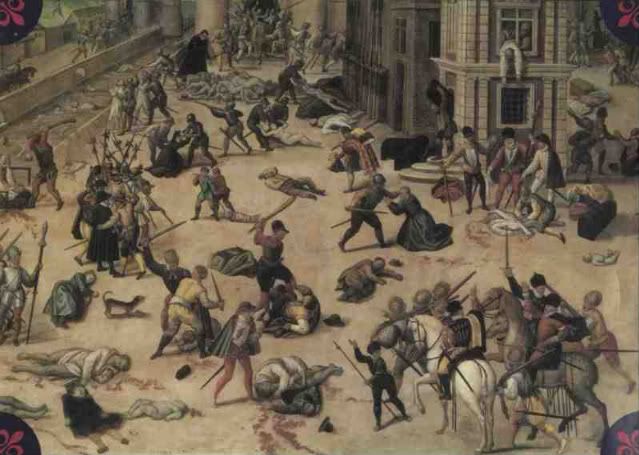
The reason I picked up the Bakewell book, besides serving as an easier way into the thousand pages of the Essays, is because she reminds us that Montaigne's central question is how to live. I often talk about how we have let serious discussion of the good life lapse. That discussion is very much present in the Essays.

He is endlessly curious about other people.

Moral dilemmas interested Montaigne, but he was less interested in what people ought to do than in what they actually did. He wanted to know how to live a good life—meaning a correct or honorable life, but also a fully human, satisfying, flourishing one. This question drove him both to write and to read, for he was curious about all human lives, past and present. He wondered constantly about the emotions and motives behind what people did. And since he was the example closest to hand of a human going about its business, he wondered just as much about himself.

Reason, for Montaigne, cannot be relied upon, because it is still inevitably human reason. Things must be seen as intrinsically uncertain and provisional.

Skepticism guided him at work, in his home life, and in his writing. The Essays are suffused with it: he filled his pages with words such as “perhaps,” “to some extent,” “I think,” “It seems to me,” and so on—words which, as Montaigne said himself, “soften and moderate the rashness of our propositions,” and which embody what the critic Hugo Friedrich has called his philosophy of “unassumingness.” They are not extra flourishes; they are Montaigne’s thought, at its purest. He never tired of such thinking, or of boggling his own mind by contemplating the millions of lives that had been lived through history and the impossibility of knowing the truth about them.

He is a fox to the core, suspicious of systems. Bakewell brings out the context for Montaigne's humane skepticism about the fallibility of human capacities and the mind: the appalling violence and cruelty and bigotry that tore France apart in his lifetime.

There was a tiredness and a sourness in Montaigne’s generation, along with a rebellious new form of creativity. If they were cynical, it is easy to see why: they had to watch the ideals that had guided their upbringing turn into a grim joke. The Reformation, hailed by some earlier thinkers as a blast of fresh air beneficial even to the Church itself, became a war and threatened to ruin civilized society. Renaissance principles of beauty, poise, clarity, and intelligence dissolved into violence, cruelty, and extremist theology.

Protestants and Catholics massacred each other and demobilized soldiers roamed the countryside stealing and killing.


This is not directly visible in the Essays, on the whole; but the general sensibility of awareness of human fallibility and search for equilibrium must be a reaction to the turbulent horror of the times.

The answer is, in part, to be sensitive to different angles of view. The wise do not just accept their surrounding assumptions.

Instead of accepting what they are born into, they acquire the art of slipping out of it and seeing everything from a different angle—a trick Montaigne, in the Essays, would make his characteristic mode of thinking and writing. Alas, there are usually too few of these free spirits to do any good. They do not work together, but live “alone in their imaginings.”

I find this very congenial, as aspect-seeing or different ways of seeing is something that fascinates me. The world's problems are generally not so much a lack of theoretical or academic understanding, as failure to perceive what is there. Blind spots bring us to disaster. Virtue is in essence a way of seeing, too.

Incidentally, this humility about reason, although seemingly so modern, is also in direct contradiction to some of our other contemporary ideas - such as Steven Pinker's argument that the "escalator of reason" makes war and cruelty less acceptable and likely. Montaigne would disagree.

Skepticism and ataraxia

However, more of Montaigne's outlook is explained by his desire for detachment and equilbrium: an attitude which is not so much modern as rooted in the classical world. Bakewell has a fascinating discussion of the origins of Montaigne's attitude in Hellenic and Roman philosophy. His generation was steeped in the classics. Indeed, Montaigne was elaborately educated with Latin as his native language and did not learn French until age six.

Epicureanism, Stoicism and Pyrrhonic skepticism shared some features, she says.

They also agreed that the best path to eudaimonia was ataraxia, which might be rendered as “imperturbability” or “freedom from anxiety.” Ataraxia means equilibrium: the art of maintaining an even keel, so that you neither exult when things go well nor plunge into despair when they go awry. To attain it is to have control over your emotions, so that you are not battered and dragged about by them like a bone fought over by a pack of dogs. It was on the question of how to acquire such equanimity that the philosophies began to diverge.

Stoics and Epicureans shared a great deal of their theory, too. They thought that the ability to enjoy life is thwarted by two big weaknesses: lack of control over emotions, and a tendency to pay too little attention to the present. If one could only get these two things right—controlling and paying attention—most other problems would take care of themselves.

This is a very interesting idea. Change of perspective is fundamental to the approach.

The key is to cultivate mindfulness: prosoche, another key Greek term. Mindful attention is the trick that underlies many of the other tricks. It is a call to attend to the inner world—and thus also to the outer world, for uncontrolled emotion blurs reality as tears blur a view. Anyone who clears their vision and lives in full awareness of the world as it is, Seneca says, can never be bored with life.

And proper control and attention means appropriate response.

Whatever happens, however unforeseen it is, you should be able to respond in a precisely suitable way. This is why, for Montaigne, learning to live “appropriately” (Ă  propos) is the “great and glorious masterpiece” of human life. Stoics and Epicureans alike approached this goal mainly through rehearsal and meditation. Like tennis players practicing volleys and smashes for hours, they used rehearsal to carve grooves of habit, down which their minds would run as naturally as water down a river bed. It is a form of self-hypnotism. The great Stoic Roman emperor Marcus Aurelius kept notebooks in which he would go over the changes of perspective he wished to drill into himself.

It was not much fun.

Stoics were especially keen on pitiless mental rehearsals of all the things they dreaded most.

I haven't been that familiar with this background. Ataraxia is a conception of the good life which is especially attractive in exhausted, troubled times. The good life is sometimes, as Voltaire later said, cultivating one's own garden.

But it is also a rather passive and defeatist conception, even if it is understandable in times of civil war or immense suffering. The original arĂȘte of the fifth and fourth century Greeks declined into detachment and activity turned into passivity. If it is reminiscent of Eastern philosophy, Bakewell says, it may be because it reflected contact with the East following Alexander's conquests .

Stoicism and its variants is a thin philosphy, and a little inhumanly austere. All the same, I'm now reading Seneca's Letters from a Stoic.

However, it is worth emphasizing it was not Stoicism that survived the Roman world, but Christianity. Christianity has aspects of detachment and "turn the other cheek" as well, of course, but it also offers hope.

That makes me think; one major argument against virtue ethics is that it is a doctrine for the aristocratic few. But it does not have to be austere. Flourising ought to be more than cultivating imperturbability. The doctrine of the golden mean is somewhat lost. Temperance does not imply renunciation. There has to be positive content to eudaimonia and flourising, freedom to as well as freedom from.


Leisure

Another issue which Montaigne ponders is how to make use of leisure, which is an increasingly important question as more and more basic work becomes automated. How to avoid being bored is increasingly one of the main questions of our age. And much of our answer in recent decades has been passive: television.

Montaigne chose to withdraw from public life in Bordeaux as he reached his early forties, and retired to a tower in his estate in the countryside.


He was later voted Mayor of the City in his absence on a trip to Italy, but never sought the public spotlight.


Seneca, in advising retirement, had also warned of dangers. In a dialogue called “On Tranquillity of Mind,” he wrote that idleness and isolation could bring to the fore all the consequences of having lived life in the wrong way, consequences that people usually avoided by keeping busy—that is, by continuing to live life in the wrong way. The symptoms could include dissatisfaction, self-loathing, fear, indecisiveness, lethargy, and melancholy. Giving up work brings out spiritual ills, especially if one then gets the habit of reading too many books—or, worse, laying out the books for show and gloating over the view.

Right at the beginning of the blog, we noted Keynes's discussion of the bored upper-middle class housewives as a warning sign of what will happen if the "economic problem" is solved. As Keynes argued:

To use the language of to-day-must we not expect a general “nervous breakdown”? We already have a little experience of what I mean -a nervous breakdown of the sort which is already common enough in England and the United States amongst the wives of the well-to-do classes, unfortunate women, many of them, who have been deprived by their wealth of their traditional tasks and occupations--who cannot find it sufficiently amusing, when deprived of the spur of economic necessity, to cook and clean and mend, yet are quite unable to find anything more amusing.

To those who sweat for their daily bread leisure is a longed--for sweet-until they get it.

The interesting thing is these problems are not new. They have affected the aristocratic few, the wealthy, through much of history.

In the early 1570s, during his shift of values, Montaigne seems to have suffered exactly the existential crisis Seneca warned of. He had work to do, but less of it than he was used to. The inactivity generated strange thoughts and a “melancholy humor” which was out of character for him.

And the answer? Mindfulness: curiosity and attentiveness.

Seneca would have approved. If you become depressed or bored in your retirement, he advised, just look around you and interest yourself in the variety and sublimity of things. Salvation lies in paying full attention to nature. Montaigne tried to do this, but he took “nature” primarily to mean the natural phenomenon that lay closest to hand: himself.

Withdrawal - a "room at the back of the shop" - is attractive but surely cannot be the whole answer, however. Engagement must be part of the good life: purpose as well as endurance.

Yet it is a vision that often recurs, from the Roman aristocrat in his villa far from the imperial court to the Chinese official retired to his pavillion in the deep mountains.

Perhaps the most disturbing possibility is we do not ultimately want to be happy.

He knew, all the same, that human nature does not always conform to this wisdom. Alongside the wish to be happy, emotionally at peace and in full command of one’s faculties, something else drives people periodically to smash their achievements to pieces. It is what Freud called the thanatos principle: the drive towards death and chaos. The twentieth-century author Rebecca West described it thus: Only part of us is sane: only part of us loves pleasure and the longer day of happiness, wants to live to our nineties and die in peace, in a house that we built, that shall shelter those who come after us. The other half of us is nearly mad. It prefers the disagreeable to the agreeable, loves pain and its darker night despair, and wants to die in a catastrophe that will set back life to its beginnings and leave nothing of our house save its blackened foundations. West and Freud both had experience of war, and so did Montaigne: he could hardly fail to notice this side of humanity. His passages about moderation and mediocrity must be read with one eye always to the French civil wars, in which transcendental extremism brought about subhuman cruelties on an overwhelming scale.

And perhaps that brings us back to the issue of coexistence. It is a noble thing to avoid suffering and war. It is necessary but not sufficient for the good life. But tempering fanaticism and zealotry is a better way to get along than imposing universal rules of neutrality, or retreating to one's garden.