Showing posts with label Work and Entrepreneurship. Show all posts

Tuesday, April 15, 2014

Trust and Attention in Opposition

This is a very thoughtful and interesting post by Seth Godin, who is a well-known marketing guru with a wonderful blog.

The two scarce elements of our economy are trust and attention.

Trust is scarce because it's not a simple instinct and it's incredibly fragile, disappearing often in the face of greed, shortcuts or ignorance.

And attention is scarce because it doesn't scale. We can't do more than one thing at a time, and the number of organizations and ideas that are competing for our attention grows daily.

People sometimes get more attention by doing a dance, he says, but violate trust in the process.

..those that pay the price to grab some momentary attention almost always do it at the cost of trust.

Part of it, no doubt, is that some of the main ways to grab attention are sensationalism, gossip, exaggeration, sex, glamor, or celebrity, which have never had wider respect. Linsey Lohan gets plenty of attention, but not much trust.

Much attention is tabloid. Much more is cat videos.

Another issue is attention span. It needs time and effort to build trust, which is usually a shared experience and co-evolution. The Internet, on the other hand, often gravitates towards tl;dr and 140-character tweets. The firehose of information hitting everyone means people take shorter and shorter gulps. Attention can be gained and lost faster than ever before.

The kicker is that the Internet also has a much quicker and more ruthless set of mechanisms to expose lack of trust than ever before as well, from Yelp and Tripadvisor with their customer reviews to the lack of gatekeepers who can direct and tamp down conversations.

We also have an inbuilt skepticism toward things that seem done purely for attention. Perceptions of motive is a major underlying force.


Tuesday, February 4, 2014

What Machines Can't Do

Here's a very nice article by David Brooks.

More generally, the age of brilliant machines seems to reward a few traits. First, it rewards enthusiasm. The amount of information in front of us is practically infinite; so is that amount of data that can be collected with new tools. The people who seem to do best possess a voracious explanatory drive, an almost obsessive need to follow their curiosity. Maybe they started with obsessive gaming sessions, or marathon all-night study sessions, but they are driven to perform extended bouts of concentration, diving into and trying to make sense of these bottomless information oceans.

Second, the era seems to reward people with extended time horizons and strategic discipline. ..

That doesn’t seem too surprising. A computer can calculate a zillion options, move by move, but a human can provide an overall sense of direction and a conceptual frame. In a world of online distractions, the person who can maintain a long obedience toward a single goal, and who can filter out what is irrelevant to that goal, will obviously have enormous worth.


Wednesday, September 4, 2013

"Stop saying robots are killing jobs"

An article in MIT Technology Review disputes that technology is destroying jobs, especially arguments from Brynjolfsson and McAfee which we've seen before.

Brynjolfsson and McAfee’s mistake comes from considering only first order effects of automation where the machine replaces the worker. But when a machine replaces a worker, there is a second order effect: the organization using the machine saves money and that money it flows back into to the economy either through lower prices, higher wages for the remaining workers, or higher profits. In all three cases that money gets spent which stimulates demand that other companies respond to by hiring more workers.

It's the traditional argument that demand simply shifts to new goods and services. But it relies on the traditional assumption that new needs are similar in economic terms to the old ones. In the example above, what of the higher wages for the remaining workers induce them to take more leisure, so total wages remain the same or even fall? That has not happened much to date, but it is a matter of taste rather than economic law.

The fundamental issue is how and when things fall outside the monetary economy, so the flow above springs a leak. I keep arguing that more and more of the things we value as we rise up the hierarchy of needs are harder to package in monetary terms, because they are not excludable nor rival goods. As the underlying nature of the economy changes, our institutions have to adapt too.


Sunday, September 1, 2013

Who will prosper in the New world?

Tyler Cowen asks in the NYT:

Who will do well? THE CONSCIENTIOUS Within five years we will are likely to have the world’s best education, or close to it, online and free. But not everyone will sit down and go through the material without a professor pushing them to do the work. Those who are motivated to use online resources will do much, much better in the generations to come.

Motivation - those who have it, those who can inspire it - is one of the main themes. It's an interesting take. I agree motivation - including incentivizing behavior - is the key issue for the emerging new economy. That's why I've been so interested in some of the classic psychology on motivation, like Maslow.


Monday, August 26, 2013

How technology wrecks the middle class

David Autor,a well-known Labor economist, and David Dorn write in the NYT today.

The good news, however, is that middle-education, middle-wage jobs are not slated to disappear completely. While many middle-skill jobs are susceptible to automation, others demand a mixture of tasks that take advantage of human flexibility. To take one prominent example, medical paraprofessional jobs — radiology technician, phlebotomist, nurse technician — are a rapidly growing category of relatively well-paid, middle-skill occupations. While these paraprofessions do not typically require a four-year college degree, they do demand some postsecondary vocational training.

It's not wholly new - a riff on the hollowing out thesis - but worth a look.

Sunday, April 14, 2013

People are just not that motivated by money alone

Here's an interesting blog post on the Harvard Business Review site on how money and motivation are related: they're not.

The results indicate that the association between salary and job satisfaction is very weak. The reported correlation (r = .14) indicates that there is less than 2% overlap between pay and job satisfaction levels. Furthermore, the correlation between pay and pay satisfaction was only marginally higher (r = .22 or 4.8% overlap), indicating that people's satisfaction with their salary is mostly independent of their actual salary.

In addition, a cross-cultural comparison revealed that the relationship of pay with both job and pay satisfaction is pretty much the same everywhere (for example, there are no significant differences between the U.S., India, Australia, Britain, and Taiwan).

It puts a little more solid evidence around the argument that is made in books like Daniel Pink's Drive: The Surprising Truth About What Motivates Us.


Tuesday, February 26, 2013

Labor and Social Links

I've been working intensively on another project in the last few weeks, so blogging has been lighter here. There's a build-up of things I want to blog about and say.

I just wanted to note this column by Ross Douhat in the NYT about the decline of work, however. The transformation of work is a major theme on this blog.

If the utopia of a world without work is being achieved, Douhat says, it isn't because the upper classes can afford it and it will gradually spread down to laborers and high school dropouts. It's happening from the bottom up.

Yet the decline of work isn’t actually some wild Marxist scenario. It’s a basic reality of 21st-century American life, one that predates the financial crash and promises to continue apace even as normal economic growth returns. This decline isn’t unemployment in the usual sense, where people look for work and can’t find it. It’s a kind of post-employment, in which people drop out of the work force and find ways to live, more or less permanently, without a steady job. So instead of spreading from the top down, leisure time — wanted or unwanted — is expanding from the bottom up. Long hours are increasingly the province of the rich.

The problem with this, he says, isn't so much income or survival. People are not starving. It's lack of social integration. It's part of the wider trend of the decline of community and social links.

One could make the case that the right to not have a boss is actually the hardest won of modern freedoms: should it really trouble us if more people in a rich society end up exercising it?

The answer is yes — but mostly because the decline of work carries social costs as well as an economic price tag. Even a grinding job tends to be an important source of social capital, providing everyday structure for people who live alone, a place to meet friends and kindle romances for people who lack other forms of community, a path away from crime and prison for young men, an example to children and a source of self-respect for parents.

It's a problem of flourishing.

In a sense, the old utopians were prescient: we’ve gained a world where steady work is less necessary to human survival than ever before.

But human flourishing is another matter. And it’s our fulfillment, rather than the satisfaction of our appetites, that’s threatened by the slow decline of work.

This is an interesting take. And of course I agree that the prime question is how our institutions contribute to human flourishing, so he is going in the right direction.

But he doesn't go far enough, perhaps. There is a difference between the labor market, which is going to keep getting more productive, and a sense of vocation.

What is clearly at issue is motivation and purpose, and how you retain and encourage and cultivate them when the economy is changing. Our civil discourse has become very bad at providing that, as I've often argued , such as here.


Wednesday, January 2, 2013

From Mercantile Exchange to Railroads

We're looking at Double Entry: How the Merchants of Venice Created Modern Financeby Jane Gleeson-White, starting here.

So double-entry book-keeping served as a foundation stone of capitalist rationality and, on an individual level, business success. Luca Pacioli's advice would echo through generations of clerks laboriously maintaining ledgers.

In Pacioli’s view, three things are needed by ‘anyone who wishes to carry on business carefully. The most important of these is cash or any equivalent, according to that saying, Without this, business can hardly be carried on.’ The second thing necessary in business ‘is to be a good bookkeeper and ready mathematician’. The third ‘and last thing is to arrange all the transactions in such a systematic way that one may understand each one of them at a glance, ie, by the debit and credit method’. Not much has changed today.

Production and Decisions

Capitalism developed and changed in the eighteenth and nineteenth centuries, however. Book-keeping evolved into accounting. The medieval core of double entry proved durable for these new, much larger enterprises.

This vast new range of double-entry applications reflects the extraordinary expansion of business from the late eighteenth century to the close of the nineteenth, a period which saw the rise of the joint stock company (a business organisation which was funded by selling shares to investors who became partners in the venture), and marks the formative era of accountancy. During these decades, accountants transformed a mere system of recording exchanges into a method of managing and controlling business. The first signs that double entry would be equal to the task of monitoring and directing this new industrial world of factories, wage labour and large-scale capital investment were found in the north of England, in the pottery works of Her Majesty’s potter, Josiah Wedgwood (1730–95)—a factory called Etruria, named, by chance, after the ancient Italian region home to Pacioli’s Sansepolcro.

Wedgwood ran a large business that often did not make much money, for inscrutable reasons. So he decided to investigate.

During this period of scrutiny, Wedgwood made an important discovery—the distinction between fixed and variable costs—and he immediately understood the implications of their difference for the management of his business.

A new form of production - large factories - led to the beginnings of cost and management accounting. This was part of a much broader evolution from a system centered on mercantile exchange to one also suited for production and accountability.

The shift in outlook required to move Pacioli’s bookkeeping system beyond its mercantile origins in an exchange economy (where it recorded the exchange of goods, owing and being owed, paying and collecting debts) to manufacturing, where the emphasis is on the production of goods (the conversion of materials and labour into products) was huge.

The growth of railroads in the mid-nineteenth century brought a whole new set of issues. They required outside investment, which both meant more audit control to prevent fraud, and clearer distinctions between income and capital, so investors could be paid dividends out of actual income.

Not only did a new form of production—factories—challenge and alter double-entry bookkeeping from the 1770s, but the financing and managing of the vast investments required to build railways during the same period of industrial expansion brought new issues of accounting and accountability.

The key accounting issue in a corporation is the amount of profit available for dividends—which means that a corporation must properly distinguish between capital and income, because profits derive from income, not from capital. This new laser-like focus on profits and dividends brought two new accounting questions to centre stage: How to calculate income or profit? And how to value assets? These questions were rarely asked before 1850 but by the end of the century they had become the major preoccupations of practising accountants.


Tuesday, January 1, 2013

The Importance of Stocks and Depreciaton


We're looking at Double Entry: How the Merchants of Venice Created Modern Finance by Jane Gleeson-White, starting here. Book-keeping evolved into accounting as outside investors needed assurance that dividends were paid out of actual income, not capital.


Railways and factories also wore out, however, which led to another important concept: capital stock and depreciation.

The advent of the corporation raised several other key accounting issues; for example, how to calculate the declining values—due to wear and tear—of large investments in machinery, rails, rolling stock (or railway vehicles), and so on. This problem gave rise to the concept of depreciation.

It took a long time for accountants to come to terms with depreciation and properly accounting for assets. And this is still a problem, she says, when it comes to the environment since many assets are free.

This is because until recently economists have assumed that natural resources are so plentiful that any loss of them is insignificant, not worth counting. They assumed that natural resources like water, soil, forests and air were free gifts of nature.

But just as the nineteenth-century railway entrepreneurs had to learn that human-made capital—rails and machinery—wears out and must be depreciated, so some economists are beginning to understand that nature’s capital is also subject to wear and tear and depletion. Cambridge University’s Professor Sir Partha Dasgupta is one economist who is critical of the GNP and its use to judge the progress or otherwise of nations. He argues, ‘as so many economists have already done, that GNP’s main weakness lies in the fact that it is insensitive to the depreciation of capital assets’. And from an environmental point of view, this is critical.

The Modern Economy is about Stocks

This is no doubt true. But she perhaps over-emphasises environmental gaps to the exclusion of other social assets like trust or quality of life.

The larger point is we are often too focused on flows rather than stocks, including the depreciation of assets (stocks meaning an amount, like a stock of wheat, rather than an equity share like the stock exchange.) This is a basic economic distinction we often forget. As Dasgupta says, we need to be sensitive to the depreciation of capital assets.

We are much better at being conscious of flows of income rather than the valuable stock of assets which produces that income. Yet many of the great economic challenges of our era have more to do with stocks than flows of income. Many or our capital assets, such as the knowledge required to build an Intel processor or the song "Hey Jude" do not depreciate in the traditional way. They may have to be re-learned or passed on, but they do not wear out.

So what happens when the stock of our valuable assets, properly defined, gets disproportionately much larger than money income flows? In many ways, our prime objective should be to increase the stock of assets. Income and distribution are secondary factors , especially of many of the benefits flowing from those assets are free. Some of our political thought gripes towards this, especially those who think capitalism should be left unfettered to create wealth which government can then redistribute. But that often confuses income with value.

We will come back to this point another time.

Finally, Gleeson-White emphasizes again how the numbers may often conceal deeper uncertainties.


Even accounting’s most fundamental concepts and practices, such as income measurement and asset valuation, are based on uncertainties. Accountants still cannot agree on how to define income, the measurement of which remains one of the intractable problems in financial accounting theory and practice. The valuation of assets only becomes more complex and more fiercely debated as modern global corporate structures and financial instruments become increasingly labyrinthine, and income measurement, the key to determining profits and therefore dividends, is inextricably linked to this contentious, chimerical practice of asset valuation. Nor is the crucial measurement of costs an objective process: costs are also highly contestable figures and may result as much from the collusion or rivalries of firms as from any other actuality. Accrual (or corporate) accounting—the need to allocate revenues and expenses between accounting periods and to value assets and liabilities at the end of an accounting period—raises problems which have never been solved and are probably incapable of solution. Numbers can be negotiated to make management look good. In effect, ‘accounts are used to justify decisions and to excuse mistakes’.

She concludes


In an era of international capital, when our wealth is more than ever tied up in its fortunes, and at a time when corporations, governments and financial institutions are demonstrating their fallibility on a global scale, it is essential that we are aware of the somewhat arbitrary laws of account that govern them—especially because it is in the labyrinthine workings of our accounting systems that value itself is assigned. It seems that if we want to bring our infinitely voracious consumerism into line with the resources of our finite planet, we must consider giving our planet a value that the market can recognise and account for, assign a monetary value to the oceans, air, forests, rivers, wildernesses. • Delete this highlight

(My bold). In the end, we come back to the problem of economic value. There have been many major shifts in perception of costs and decisions and stocks and accountability and depreciation. Together, they make up the modern economy.

It is time for another major shift, to cope with intangibles and abundance and our reliance on those abundant stocks. Value should not be defined by arbitrary default.


Friday, November 30, 2012

Welfare and the Good Life


We're looking at Charles Murray's Coming Apart: The State of White America, 1960-2010, starting here.

Against the European Welfare model

The connection between the four basic social institutions and happiness leads Murray to argue for American exceptionalism, as against the European welfare model.

The tacit assumption of the advanced welfare state is correct when human beings face starvation or death by exposure. Then, food and shelter are all that count. But in an advanced society, the needs for food and shelter can be met in a variety of ways, and at that point human needs can no longer be disaggregated. The ways in which food and shelter are obtained affects whether the other human needs are met.

People need self-respect, but self-respect must be earned—it cannot be self-respect if it’s not earned—and the only way to earn anything is to achieve it in the face of the possibility of failing.

This is of course a version of what I have talked about before, a change in needs as we rise up Maslow's hierarchy. The welfare state ramified in the 1960s as one response to abundance. Given sufficient wealth, the main political drive has been towards equal distribution rather than new flourishing and possibility.

Upper class people still generally practice these four institutional virtues, he says. They are much more likely to be married, see a job as a calling and work hard, practice religion, and believe others can be trusted. In a sense, getting ahead requires them.

The new upper class still does a good job of practicing some of the virtues, but it no longer preaches them. It has lost self-confidence in the rightness of its own customs and values, and preaches nonjudgmentalism instead.

He thinks this view, nonjudgemental "niceness", is living on borrowed time, however, as science produces more results which refute it.

Here are some more examples of things I think the neuroscientists and geneticists will prove over the next few decades: Human beings enjoy themselves when they are exercising their realized capabilities at the limit of those capabilities. Challenge and responsibility for consequences is an indispensable part of human motivation to exercise their realized capabilities at the limit of those capabilities. People grouped by gender, ethnicity, age, social class, and sexual preference, left free to live their lives as they see fit, will produce group differences in outcomes, because they differ genetically in their cognitive, psychological, and physiological profiles. Regardless of whether people have free will, human flourishing requires that they live in an environment in which they are treated as if they did.

So he thinks it will become obvious that nonjudgemental welfarism will be understood to undermine the crucial institutions of society.

The institutions surrounding marriage, vocation, community, and faith will be found to be the critical resources through which human beings lead satisfying lives. It will be found that those institutions deteriorate in the advanced welfare states for reasons that are intrinsic to the nature of the welfare state. It will be found that those institutions are richest and most robust in states that allow people to work out their lives on their own and in company with the people around them.

Putting it together

So what do we make of this? As a rule I consider libertarianism a horrible mistake. But Murray is a strange kind of libertarian. He is not so much arguing for the market and voluntary Ayn Randian contractualism, as strengthened independent social institutions.

He calls for an emphasis on virtue, which I like, but it in practice he means strengthening his four core institutions rather than the Aristotelian virtues as such. It is sociology more than ethics. He does not have much of the rest of virtue ethics, such as the golden mean, or an emphasis on the multiplicity of virtues.

What he does have is a kind of sociological vision of the good life, of flourishing, which I think makes him divergent from full libertarianism. Flourishing for him means strengthening those four institutions and reducing the role of government and bureaucracy in life.

I think this is what my friend, who I mentioned at the beginning of the post, was hostile to. Murray says people have to make their own choices in life, but his view is much less sympathetic for radical innovation in lifestyles. He believes in marriage, in standard jobs, in the churches, in stability.

But there is a basic confusion here. People do not work out their lives on their own, or even just in the company of those around them. They do so in the context of an ethical vision of the good life, of what contributes to happiness. We do not start off from year zero every time we make a decision.

Government and bureaucracy cannot run our lives for us. That much is true. But we still need a conception of the common good. Traditional libertarianism does not do that. It is just about process. Murray's distaste for government means he throws much of the possibility of common culture out as well.

I've said a number of times I think the debate between government and the market is a stale 20th century debate. Instead, the real issue is what we do about abundance and what flourishing means. Murray contributes some hard statistical evidence to that question, about the value of social institutions. But it correlation, rather than explanation.

It is a good argument against welfarist government. But it does not make any case for the positive possibilities of abundance, or how institutions need to adapt. What becomes of work if the demand for medium-skilled jobs is being hollowed out, for example? How do you promote social trust?

America is about new possibilities of freedom - and what that means substantively when material necessities are met.


Thursday, November 29, 2012

Virtue and the Founders

We're looking at Charles Murray's Coming Apart: The State of White America, 1960-2010, starting here.

Murray argues that mainstream America is seeing crucial social institutions erode. He gives a fascinating account of how the founders of the United States were convinced that the bedrock of the Republic was the virtue of the people. Naturally, I found this illuminating because of my continued interest in virtue ethics, like this post the other day. According to Murray,

Everyone involved in the creation of the United States knew that its success depended on virtue in its citizenry—not gentility, but virtue. “No theoretical checks, no form of government can render us secure,” James Madison famously observed at the Virginia ratifying convention. “To suppose that any form of government will secure liberty or happiness without any virtue in the people is a chimerical idea.”

For Benjamin Franklin, this meant that “only a virtuous people are capable of freedom. As nations become more corrupt and vicious, they have more need of masters.” On the other hand, virtue makes government easy to sustain: “The expense of our civil government we have always borne, and can easily bear, because it is small. A virtuous and laborious people may be cheaply governed.”

Washington emphasized the point too:

George Washington said much the same thing in the undelivered version of his first inaugural address, asserting that “no Wall of words, no mound of parchment can be formed as to stand against the sweeping torrent of boundless ambition on the one side, aided by the sapping current of corrupted morals on the other.” Or as he put it most simply in his Farewell Address: “Virtue or morality is a necessary spring of popular government.” In their various ways, the founders recognized that if a society is to remain free, self-government refers first of all to individual citizens governing their own behavior.

This shows, of course, how natural and widespread and unexceptional a belief in the virtues was before the utilitarian 19th century.

Now Murray believes virtue is eroding.

The success of America depended on virtue in the people when the country began and it still does in the twenty-first century. America will remain exceptional only to the extent that its people embody the same qualities that made it work for the first two centuries of its existence. The founding virtues are central to that kind of citizenry.


Four key institutions

He spends much of the rest of the book distingushing between the mores of an upper class suburb, which he calls Belmont, and a lower class one, Fishtown. The four core institutions of society - marriage, work, religion, and social trust - have all eroded markedly in Fishtown, he says. Marriage has declined:

For the first time in human history, we now have societies in which a group consisting of a lone woman and her offspring is not considered to be sociologically incomplete—not considered to be illegitimate—and so I will adapt and call them nonmarital births.

So too has the work ethic. One interesting thing is he emphasises work as a vocation, a calling, rather than just a means to pay the bills. He thinks that even low-paying work can give meaning if it helps support others.

Yes, you can overdo it. There is more to life than work, and a life without ample space for family and friends is incomplete. But this much should not be controversial: Vocation—one’s calling in life—plays a large role in defining the meaning of that life. For some, the nurturing of children is the vocation. For some, an avocation or a cause can become an all-absorbing source of satisfaction, with the job a means of paying the bills and nothing more. But for many others, vocation takes the form of the work one does for a living.

The data shows lower-class neighnborhoods have changed much more than upper-class ones.

In 1960, 81 percent of Fishtown households had someone working at least forty hours a week, with Belmont at 90 percent. By 2008, Belmont had barely changed at all, at 87 percent, while Fishtown had dropped to 60 percent. And that was before the 2008 recession began. As of March 2010, Belmont was still at 87 percent. Fishtown was down to 53 percent.

Religious adherence - Catholicism in the case of Fishtown, which is based on an actual inner suburb in Philadelphia - has declined sharply.

The jury is still out on the metaquestion of whether secular democracies can long survive. But the last few decades have brought forth a large technical literature about the role of religion in maintaining civic life and the effects of religion on human functioning.

Social trust has also plunged.

The scariest message from the GSS [survey] does not consist of declines in specific activities that make up social capital, but this: The raw material that makes community even possible has diminished so much in Fishtown that the situation may be beyond retrieval. That raw material is social trust—not trust in a particular neighbor who happens to be your friend, but a generalized expectation that the people around you will do the right thing. As Francis Fukuyama documented in Trust: The Social Virtues and the Creation of Prosperity, the existence of social trust is a core explanation of why some cultures create wealth and other cultures are mired in poverty.

Diversity, for all its positive qualities, also erodes social trust.


Another problem regarding social trust, and one that may help explain the decline, has surfaced more recently: The key ingredient of social capital, social trust, is eroded by ethnic diversity. In the years after Bowling Alone appeared, Robert Putnam’s research led him to a disturbing finding: Ethnic diversity works against social trust within a community—not only against trusting people of the other ethnicity, but against trusting even neighbors of one’s own ethnic group. In addition, Putnam’s research found that in areas of greater ethnic diversity, there was lower confidence in local government, a lower sense of political efficacy, less likelihood of working on a community project, less likelihood of giving to charity, fewer close friends, and lower perceived quality of life.

The erosion of these institutions diminishes happiness. And there is a common notion of what happiness means, says Murray.


... the core nature of human happiness is widely agreed upon in the West. It goes all the way back to Aristotle’s views about happiness in the Nicomachean Ethics. Distilling his discussion of happiness into a short definition leaves out a lot, but this captures the sense of Aristotle’s argument well enough for our purposes: Happiness consists of lasting and justified satisfaction with life as a whole. The definition in effect says that when you decide how happy you are, you are thinking of aspects of your life that tend to define your life (not just bits and pieces of it); that you base your assessment of your happiness on deep satisfactions with the way things have gone, not passing pleasures; and that you believe in your heart of hearts that those satisfactions have been worth achieving. It is not really a controversial definition—try to imagine a definition of happiness you could apply to your own life that is much different.

There seems to be a strong connection in survey evidence between the strength of Murray's four core institutions and happiness.

At baseline—unmarried, dissatisfied with one’s work, professing no religion, and with very low social trust—the probability that a white person aged 30–49 responded “very happy” to the question about his life in general was only 10 percent. Having either a very satisfying job or a very happy marriage raised that percentage by almost equal amounts, to about 19 percent, with the effect of a very satisfying job being fractionally greater. Then came the big interaction effect: having a very satisfying job and a very happy marriage jumped the probability to 55 percent. Having high social trust pushed the percentage to 69 percent, and adding strong religious involvement raised the probability to 76 percent.

I'll conclude looking at the book tomorrow.


Monday, November 26, 2012

Companies which lose good ideas

I subscribed a month ago to a wonderful daily e-mail, delanceyplace, which provides excerpts from current non-fiction books, with links to Amazon which benefit a children's literacy project. Today's excerpt is from a book called Advocacy by John A. Daly, with remarkable examples of how people with good ideas could not get them accepted in their original companies. Check it out on the delanceyplace site. An excerpt from the excerpt:

"Business history is dotted with stories of opportunities lost because people within companies were unsuccessful in pitching their ideas. And those neglected opportunities were consequential. Competitors seized market share that could have been kept and increased if the good idea had been adopted. Take the minivan. Who came up with that idea -- Chrysler? No. Ford engineers came up with that idea -- they called it the van-wagon -- but they couldn't convince management that customers would buy it. In fact, one executive who endorsed it, Hal Sperlich, was fired and went on to lead the effort at Chrysler, which then dominated the minivan world for many years. Ford lost out. ...

"Sam Walton, the founder of Walmart, started his career as a franchisee in the Ben Franklin chain of stores. Walton tried to convince the Ben Franklin executives that his model of buying directly from manufacturers and offering deep discounts would lead to incredible opportunities. They didn't listen, Walton implemented the idea himself, and Walmart became an international phenomenon. ...

The same applies to Intel, and many other companies. But the best example is Apple.

"Steve Wozniak, a cofounder of Apple Computers, was working at Hewlett Packard when he and Steve Jobs designed their first personal computer. Wozniak had signed a document at HP saying that whatever he designed as an employee belonged to HP. He said, 'I loved [HP]. That was my company for life. So I approached HP .... Boy, did I make a pitch. I wanted them to do it. I had the Apple I, and I had a description of what the Apple II could do. I spoke of color. I described an $800 machine that ran BASIC (an early computer language), came out of the box fully built and talked to your home TV: And Hewlett-Packard found some reasons it couldn't be a Hewlett-Packard product.'

"Later, when HP began work on a computer, Wozniak approached the project managers and asked to work on it. 'I really wanted to work on computers. And they turned me down for the job. To this day I don't know why. I said, 'I don't have to run anything,' even though I'd done all these things and they knew it. I said, 'I'll do a printer interface. I'll do the lowliest engineering job there is.' I wanted to work on a computer at my company and they turned me down.' Think how different the computer industry would be if Wozniak had successfully pitched his ideas to HP. ...

I read a good book about pitching ideas and overcoming objections a while back, Buy-In: Saving Your Good Idea from Getting Shot Down by John Kotter. I've had good ideas shot down nonetheless. Sometimes no amount of persuasion will work. 

The reason capitalism works better as a system is not because it's efficient or elegant - I was talking about this concerning General Electric the other day - but because in the medium term, in aggregate, fewer good ideas are shot down. So it is more adaptable and innovative.


Saturday, November 24, 2012

The Internet of Things

GE is building up a huge new research center in the East Bay, near Silicon Valley, says this NYT article, because the same thing that powers sharing trivia on Facebook could also share much more significant data in the real economy. The industrial Internet is being born.

.. G.E.’s effort, analysts say, shows that Internet-era technology is ready to sweep through the industrial economy much as the consumer Internet has transformed media, communications and advertising over the last decade.

The key is adding sensors to machines, to help make them more intelligent.

Today, G.E. is putting sensors on everything, be it a gas turbine or a hospital bed. The mission of the engineers in San Ramon is to design the software for gathering data, and the clever algorithms for sifting through it for cost savings and productivity gains. Across the industries it covers, G.E. estimates such efficiency opportunities at as much as $150 billion.

I think this is very interesting, but the question is whether it will prove to be about transformation and new business models, not simply efficiency. There is a certain amount of big data "me-too-ism" about it.

I was watching an interview between Jeff Bezos and Charlie Rose the other day. Bezos said they never liked to enter a market just because they could. There isn't much money to be made doing the same thing as everyone else, entering a market late a in "me-too" way.

GE may be very good at efficiency, but I wonder if they can innovate as well. We've seen before that the rise of the modern world cannot be explained by greater efficiency, but by doing things in new ways. And I say that as a GE shareholder. Their share price is still near half what it was before the crisis.

They have such vast scale that more efficiency means millions of dollars for even tiny gains, and that could ripple across the economy in power and transportation sectors. But we need new possibilities as well.


Tuesday, November 20, 2012

Aristotle: Virtue and Happiness

I'm going to conclude a series of posts about Aristotle's The Politics , which start here.


He warns again against simply doling out surplus, as in a welfare state - which apparently happened at the time, and notoriously so later in antiquity in the form of Roman bread and circuses.


On the other hand if revenues are available, one should not do what popular leaders today do - make a free distribution of the surplus. (When people get it, they want the same again: this sort of assistance to the poor is like the proverbial jug with a hole in it.) .. Every effort therefore must be made to perpetuate prosperity. And since that is to the advantage of the rich as well as the poor, all that accrues from the revenues should be collected into a single fund and distributed in block grants to those in need, if possible in lump sums large enough for the acquisition of a small piece of land, but if not, enough to start a business, or work in agriculture. p375

Independence is preferable to simply handing out revenues, he thinks. It is a timeless thought. Often we think we are the first generation to confront a problem, or we are wonderfully modern and sophisticated. But it is just as often because we don't know how often it has been confronted in the past. We forget lessons which were already manifest in 350 B.C.


A constitution needs a view of the most desirable life

However, he comes back to his main point. We have to know what the good life is to design political institutions to achieve it.

If we wish to investigate the best constitution appropriately, we must first decide what is the most desirable life; for if we do not know that, then the best constitution is also bound to elude us. p391

He believes that virtue is the precursor to prosperity and happiness.

Thus people suppose that it is sufficient to have a certain amount of virtue; but they set no limit to the pursuit of wealth, power , prosperty, reputation and the like. {But} it is not by means of external goods that men acquire and keep the virtues, but the other way around; and to live happily, whether men suppose it to consist in enjoyment or in virtue or in both, does in fact accrue more to those who are outstandingly well-equipped in character and intellect, and only moderately so in the possesion of externally-acquired goods. p392

Of course, one of the more difficult issues in life is that sometimes character and virtue are not rewarded, of course. Time and chance happen to everyone. But it is still probable that as a rule people who are prudent and temperate and courageous and honest will do better. Parents generally teach their children to be honest rather than lie, after all. And living happily has only a tenuous connection with wealth and material goods beyond a certain threshold, as we know from the Easterlin paradox.

So Aristotle may overstate the point when he says

Let this then be agreed upon at the start: to each man there comes just so much happiness as he has of virtue and of practical wisdom, and performs actions dependent thereon. p392

But we would like it to be true. And in the long run, on average, it probably is true - and, like Pascal's bet, it is probably better to act as if we believe it is true.


Defining the Good Life

So what's the good life, or the best life? Not asceticism or denial or honor/shame or material success.

For the present, let this be our fundamental basis: the life which is best for men, both separately, as individuals, and in the mass, as states, is the life which has virtue sufficiently supported by material resources to facilitate participation in the actions that virtue calls for. p393

Although this is open to all, some avenues attract the most ambitious.


Both in earlier and in modern times men most ambitious for virtue seem generally to have preferred these two kinds of life, the statesman's or the philosopher's. p395

We have to have some purpose, or target.

The well-being of all men depends on two things; one is the right choice of target, of the end to which actions should tend, the other lies in finding the actions that lead to that end. p427

Aristotle is very teleological, of course. I often complain about liberal neutrality. But there is a liberal teleological tradition as well, and a leftist one stemming from Marx and Hegel. The problem is the good life they aim at is a vague abstract equality without much substance.

I would add another element. We need a choice of target, if nothing else because the economy and society naturally evolve regardless of whether we choose to perceive it. We can and ought to at least choose the fitness and selection criteria for the kind of change we experience.

So was it worth looking in such detail at a classic work, from a world in which a trireme or a horsecart was high technology? Yes. While looking up the Easterlin reference above, I came across this previous quote from Deirdre McCloskey in this blog post:

The great economist Simon Kuznets, notes his student Richard Easterlin, believed that "the `givens' of economics- technology, tastes, and institutions- are the key actors in historical change, and hence most economic theory has, at best, only limited relevance to understanding long-term change.

The technology has changed since Aristotle's day, of course. But tastes and institutions are still the key actors which we need to understand in a much less superficial way than our own parochial view allows.

And that is why stepping far outside our own parochial view , right back to first principles at the origin of many of our conceptions about ethics and politics, can give us a fresh perspective on our current challenges.

Monday, November 19, 2012

Investing in local neighborhoods

This is a fascinating piece in Atlantic Cities:

The Millers have invested the last two years and nearly a million dollars in trying to answer this question: Why can’t small-time investors put their money in their own communities? Then, finally, in August, they successfully took a single property on H Street public


Wednesday, November 14, 2012

Aristotle: Citizenship and Constitutions

We're talking about Aristotle's The Politics , starting here, because it's useful to go back to first principles and get a long view of our political and economic problems.

Citizenship

One matter which has attracted attention in social democratic circles in the last few years is the notion of citizenship. (I have a recollection of a long discussion in David Held's Models of Democracy, but haven't read it in a while.)

In general, however, our conception of citizenship is now very confused and unclear. It mostly tends towards simply residence, or miminal civic inclusion, rather than any common ethnicity or values or beliefs. Multiculturalism has become the ideal on the left, as well as sectional rather than national identity. We have had an immense shift in the last fifty years from ideas of national self-determination and decolonization to purely civic membership, with no obligations except to obey the law and pay taxes.

Aristotle ( who spent much of his life as a foreign resident in Athens) is adamant that citizenship is not just residence. Instead,

What effectively distinguhes the citizen proper from all others is his participation in giving judgment and in holding office. p169

A citizen must be capable of meaningfully participating in deliberation. So is the good man and the good citizen the same thing? Not quite. For one thing, it will depend on the kind of consitution a citizen lives under.

Not that good ruling and good obedience are the same virtue - only that the good citizen must have the knowledge and ability both to rule and to be ruled. That is what we mean by the virtue of a citizen - understanding the governing of free men from both points of view. p182

You cannot, on this perspective , really be a citizen by simply asserting rights or claims against the whole, rather than also seeing the perspective of those who must meet those rights and claims and comsequences.

And the virtue of the ruler and the citizen are not the same. The virtue of the ruler is mostly practical wisdom, or phronesis, which is neither theoretical nor technocratic, but skilled ability to judge particular situations. The virtues of the private citizen are wider.

Strikingly from our perspective, as a rule he also believed anyone who works as skilled craftsman or works for wages for others cannot be a citizen...

for it is quite impossible, while living the life of a mechanic or hireling, to occupy oneself as virtue demands. p184

That perhaps vanished as a sensible view with the increased scale of organizations with the industrial revolution. But the notion that one must have time and energy to reflect still stands, perhaps.

The common good

He then separates good from bad constitutions. The notion of a good constitution is very clear:

It is clear that those constitutions which aim at the common good are right, as being in accord with absolute justice; while those which aim only at the good of the rulers are wrong. p189

Looking to simpy private advantage, "be it of the one or the few or the mass" is a deviation, when the interests of one section of the community take precedence over the others.

This has contemporary relevance as well. Seeing politics as simply a matter of demographics, of sectional interest and redistribution and faction, obscures and denies the common good. I think this is where the Democrats, as a coalition of minority and special interest groups, usually go wrong, and where the GOP is joining them with its increasingly libertarian tone. Assembling enough sectional coalition elements to get to 50.1% is not the same as advocating for a view of the common good.

It also prefigures much contemporary analysis, such as the notion of "inclusion" in Why Nations Fail. Small groups often focus on dividing a small collective pie to their own advantage, instead of making the pie bigger.


Of course, there can be different views of the common good. But you need some conception of the good. And you need to go beyond the shallow Pareto optimality of welfare economics to have any real insight into the common good. We will come back to this later.

So Aristotle distinguishes six kinds of rule: monarchy, and its deviant twin tyranny; aristocracy (in the old sense of rule by the aristoi, or the best and most virtuous men, not traditional European landed upper classes) and its deviation, oligarchy, typically the rule of the few or the wealthy; and polity, which is "political control exercised by the mass of the populace in the common interest" versus its somewhat deviant twin, democracy, which is rule only "for the benefit of the men without means." , ie the poor. p190


Expert Judgement

Although he is against giving power to those with little or no time to reflect or use their reason, he is nonethless very supportive of wider participation. Almost 2300 years before the rise of the middle classes in Europe, Aristotle emphasizes wide deliberation and the importance of the middle sort. For one thing, a wider group often makes better decisions.

For it is possible that the many, no one of whom taken singly is a sound man, may yet, taken all together, be better than the few, not individually but collectively, in the same way that a feast to which all contribute is better than one supplied at one man's expense. p202

Interestingly, this is a little different from 'many chefs spoil the broth' or the cult of leadership. This too prefigures what we find today, such as the greater accuracy of aggregate economic forecasts that we were looking at the other day.

He has a dietary analogy: it is actually preferable to include "rougher" classes in discussion with the powerful:

By thus mixing with the better sort, they render good service in their states, in something like the way that a combination of coarse foods with refined renders the whole diet more nutrtious than a small amount of the latter. p204

So, says Aristotle, democracy is "the most moderate of the deviations" p239. And polity, the ideal, " is a mixture of oligarchy and democracy." p259

Similar comsiderations apply to experts, according to this author who spent twenty years in the original Academy. There are some things in which they should be judged by their peers. But in others, users are much better judges than expert producers.

.. that provided the mass of the people is not too slave-like, each indiviudal will indeed be a worse judge than the experts, but collectively they will be better, or at any rate no worse. Secondly, there are tasks of which the actual doer will be neither the best nor the only judge, cases in which even those who do not posses the skill form an opinion on the fnished product. .. So too the user of a rudder , the helmsman, is a better judge of it than the carpenters who made itl and it is the diner not the cook that pronounces upon the merits of a dinner. p205

This reminds me of William F. Buckley's assertion that "I'd rather entrust the government of the United States to the first 400 people listed in the Boston telephone directory than to the faculty of Harvard University ."

Expert judgement has its limits, according to one of the first experts.


Tuesday, November 13, 2012

Aristotle: Household, Wealth, Common Property

We're talking about Aristotle's The Politics , starting here.

The household

The first few chapters, on the household, do seem like a relic of a distant 350 BC, and are best hurried through. It is hard to relate to the small farms or city households of ancient Athens or the Troad. This household management, oikonomia , is however the origin of the term "economic."

Most objectionately to modern readers, he believes some people lack the capacity for deliberative reason, so that they are slaves by nature ( although ancient slavery was not racially based). He also takes for granted strict division between the sexes. The head of the household must have moral virtue in its entirety; others, such as women, children, and slaves, in lesser degree.

He was perhaps more enlightened than many of his time , but he was of his time. He took for granted that, as a matter of practical necessity, some had to labor, not least because they were not suited to do anything else.

Of course, for us automation has removed much of the raw mechanical labor from life, although the economy still has an insatiable appetite for cheap labor in many agricultural and service industries. And we more optimistic about people's capacity for reason (although sometimes I wonder, if you see any episode of Access Hollywood or other celebrity glop).

What he says also entails one expects much more from the free, independent head of household in moral terms than children or servants or dependents. We still believe that of children, of course. Perhaps the capacity for moral virtue differs, and that is something we set aside in contemporary debate.

Wealth

He talks about the acquisition of property, and the definition of wealth. Wealth, properly thought of, is a tool:

Solon in one of his poems said "no bound is set on riches for men." But there is a limit, as in the other skills; for none of them have any tools which are unlimited in size or number, and wealth is a collection of tools for use in the administration of a household or state. (P 79 in the Penguin edition).

Of course, one can acquire goods without limit, but the function of the household is to use them.

The reason why some people get this notion into their heads may be that they are eager for life but not the good life; so, desire for life being unlimited, they desire an unlimited amount of what enables life to go on. Others again, while aiming at the good life, seek what is conducive to the pleasures of the body. So, as this too appears to depend on the possession of property, their whole activity centers to business. For where enjoyment consists in excess, men look for that skill which produces the excess that is enjoyed. (p85)

This of course is still a live political issue - is there a point where we have enough? How much is enough? (the title of a book I looked out a few weeks ago). It is also very much linked to questions of environmentalism. There is a very old tradition which sees the answer to human happiness not in prosperity and abundance but in limiting human desires. That ancient ascetic creed can surface today in those who want us to abandon growth and return to a significantly simpler lifestyle.

I think the answer is it is almost impossible to define what "enough" is, or what wealth itself is, without some conception of the good life and flourishing. Seeing wealth primarily as a tool for particular purposes, something to use and activate, rather than a pile of gold or financial assets is productive. It can be hard to transform financial assets into a flourishing, happy, secure life, as many celebrity divorcees or high-profile occupational burnouts know.

Aristotle also somewhat disapproves of trade and charging interest, "since it arises not from nature but from men's gaining from each other", views which were to still resonate late into the modern period, and underpinned nobility looking down on the merchant classes. We have seen this before, (including a quote from the Politics) in the deep suspicion of many religious and philosophical traditions of the institution of money.

But pragmatist that he is, he can have a shrewd appreciation of business. Thales of Miletus, he says, was criticized for making little money from philosophy. So one year he cornered the olive oil presses on his island just before a good harvest.

He made a lot of money, and so demonstrated that it is easy for philosophers to become rich, if they want to; but that is not their object in life. .. the principle can be applied more generally: the way to make money is to get, if you can, monopoly for yourself. (P90).

And that is also why we have to be very careful of monopolies and businsss restrictions and regulation sometimes.

It is also an illustration of how most ideas in the humanities and social sciences are rediscoveries or permutations of much older themes. Michael Porter would advise the way to profitability is to build barriers to entry (Competitive Strategy: Techniques for Analyzing Industries and Competitors). Warren Buffett looks for businesses with a "moat."

Against common property

Aristotle then turns to the state and comparative politics, looking at a number of constitutions including Athens, Sparta, Crete and Carthage.

He has a modern skepticism for Plato's notion of communal ownership or modern socialist property, not to mention sharing wives and children:

The greater the number of owners, the less respect for common property. People are much more careful of their personal possessions than of those owned communally; they exercise care over common property only insofar as they are personally affected. Other reasons apart, the thought that someone else is looking after it tends to make them careless of it. P108

That is also true for organizations, which is why assigning responsibility and accountability is often so important.

What was later called "to each according to his needs" is also met with skepticism by Aristotle.

For if the work done and the benefits accrued are equal, well and good; but if not, there will inevitably be ill-feeling between those who get a good income without doing much work and those who work harder but get no corresponding extra benefit. To live together and share in any human concern is hard enough to achieve at the best of times, and such a state of affairs makes it doubly hard. P114

This has a very contemporary ring about it, no doubt because it is such a timeless human response. So common ownership of property has inherent difficulties. At least, he says, existing laws are strengthened by familiarity.

Far better is the present system - provided that it has the added attraction of being a matter of habit and of being controlled by sound laws.

Even if you could fix a level of common possessions, and achieve absolute material equality,

to fix a moderate amount for all, that would still be no use: for it is more necessary to equalize appetites than possesions, and that can only be done by adequate education under the laws. ... And civil strife is caused by inequality in distinctions no less than inequality in property, though for opposite reasons on each side; that is to say, the many are incensed by the inequality in property, whereas more accomplished people are incensed if honors are shared equally, for then, as the tag has it, 'good and bad are held in equal esteem. p129

This is very important for my interests, as an obvious response to economic abundance is some kind of minimum or basic income. It is an essential illustration of the issues which surround distribution more generally.

The matter of equal esteem and distinctions is also important. It suggests the difficulties of those small slivers of society which have actually achieved abundance in the past. The behavior of aristocracies (or as Aristotle would more likely say, oligarchies) is highly instructive. When landed estates mean they have no immediate material needs, the result has often been a focus on rank and status and courtier affectation, not a higher form of achievement or freedom.

It also is clear that many of our contemporary political issues are claims or conflicts about equality of esteem, more than economic equality.

Moreoever,

Secondly, the depravity of mankind is an insatiable thing. At first they are content with a dole of a mere two obols, then, when that is traditional, they go on asking for more and their demands become unlimited. For there is no natural limit to wants and most people spend their lives trying to satisfy them. p131

Such is the fate of the welfare state as it develops toward fiscal catastrophe, perhaps. And it is a general warning about the complications and difficulties of redistributing wealth.

In general, he is concerned with the immediate psychology of how people will see things and behave in practice, rather than ultimate principle, which is why it is useful wisdom.

We of course instinctively see how what he says helps explain why the USSR and other communist states got into trouble. But it is also a warning against some of our own practices, though that may be harder to see.


Change

He is very conservative with a small c.

.. it is clear that there are some occasions which call for change and that there are some laws that need to be changed. But looking at it in another way we must say that there will be need of the very greatest caution. ..A man will receive less benefit from changing a law than damage from becoming accustomed to disobeying authority. .. The law has no power to secure obedience save the power of habit, and that takes a long time to become effective. Hence easy change from established laws to new laws means weakening the power of the law. p138-9

Habituation is a major theme in his ethical approach. There can be significant downside to basing institutions and expectations on the thin and fragile ground of rational choice alone.

What should reformers take from that? Not that reform or major change is impossible, or ought not to be attempted. But that you have to be aware of the practical difficulties and downsides, and do something to avoid or confront or control them. As I said before the election, the left's dreams often turn into darkness , because they look at one shining principle at the expense of daily reality and psychology.

Progress should be measured not by intentions but by actual flourishing lives.

Of course, seeing this as wry, shrewd advice depends on assuming that some elements of human nature are constant, and the human predicament has some timeless elements that unite us with someone who lived so long ago. In international relations, there has been a long debate over Thucydides, and whether his similar observations of power politics and war and history in Ancient Greece (The History of the Peloponnesian War) still have application today.  

I would say that we do advance a little in social understanding over time. But not as much as we think.

I'll look at more tomorrow.


Saturday, November 10, 2012

Acceleration and flexibility in the economy

This is a fascinating story in the NYT about Zara, the huge Spanish clothes retailer, which says a lot about business and consumption. Zara has vastly accelerated the cycle of fashion. They monitor what customers are buying, and also saying to sales clerks. So if one item is selling, they can have more of them and more similar designs manufactured, shipped and on the shelves within three weeks.

Merchandise moves incredibly quickly, even by fast-fashion standards. All those thousands of Inditex stores receive deliveries of new clothes twice a week.

In this way, says Masoud Golsorkhi, the editor of Tank, a London magazine about culture and fashion, Inditex has completely changed consumer behavior.

“When you went to Gucci or Chanel in October, you knew the chances were good that clothes would still be there in February,” he says. “With Zara, you know that if you don’t buy it, right then and there, within 11 days the entire stock will change. You buy it now or never. And because the prices are so low, you buy it now.”

And fashion trends are now worldwide and instantaneous.

I remarked that it must be interesting to see what is fashionable in Turkey but not in New York and vice versa. I imagined that different nationalities still had different tastes, at least in terms of fashion. But I was wrong.

“Actually, the customer is more or less the same in New York and Istanbul,” she said. “There are differences, like Brazilian girls like more brilliant colors, whereas in Paris they use more black. But in general when you find a fashion trend, it’s global.”

It is similar to the evolutionary paradigm I have talked about before, in fact, from the very beginning of the blog. They try lots of small experiments, shipping just three or four skirts or jackets to a store. When they find something working, they immediately replicate and build on it. And they adapt extremely fast.

I wonder how fast the economy can really spin, though. Fashion has always been a special case. Change for the sake of change, for display and identity, might apply to clothes or phones. It seems to apply less to things like cars than before, though. The economy is increaingly intangible altogether.

And some things get increasingly commodified and generic at the same time as other things become the object of relentless change. Commodification is just a heartbeat or a moment away.


Monday, October 15, 2012

Is US Economic Growth Over?

Here is something I'll have to look at (from an NYT article):

The American economy is running on empty. That's the hypothesis put forward by Robert J. Gordon, an economist at Northwestern University. Let's assume for a moment that he's right. The political consequences would be enormous.

In his widely discussed National Bureau of Economic Research paper, "Is U.S. Economic Growth Over?" Gordon predicts a dark future of "epochal decline in growth from the U.S. record of the last 150 years." The greatest innovations, Gordon argues, are behind us, with little prospect for transformative change along the lines of the three previous industrial revolutions:

It is pretty gloomy.

Over most of human history, in Gordon's view, the world had minimal economic growth, if it had any at all - and "there is no guarantee that growth will continue indefinitely." Gordon's paper suggests instead that "the rapid progress made over the past 250 years could well turn out to be a unique episode in human history."


An open access version of The Gordon article is here, although I haven't read it yet. It sound similar to Tyler Cowen's arguments.


Saturday, October 13, 2012

Montaigne and How to Live

I read Sarah Bakewell's book How to Live: Or A Life of Montaigne in One Question and Twenty Attempts at an Answer last week. It is an original and beautifully written biography, but more than that: it not only looks at Montaigne's life and writings, the book also traces how their reception and meaning has changed in succeeding centuries. That adds a whole additional layer of complexity, exploring how different ages have reinterpreted the same ideas in different ways.

Of course, I have Michel de Montaigne - The Complete Essays on my shelf, but must admit I hadn't read much of its rather intimidating bulk. Bakewell's book certainly inspires a return to the original.
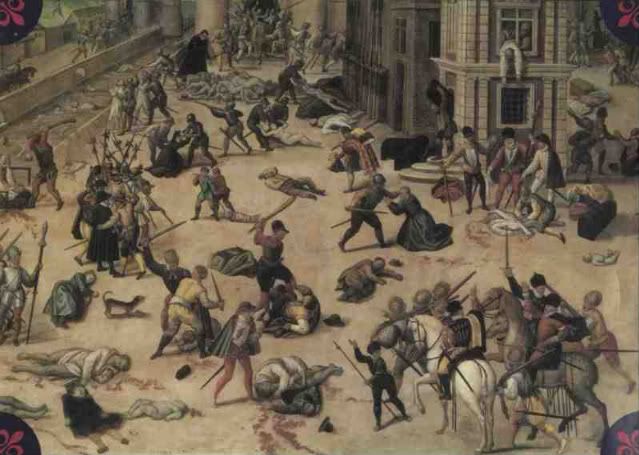
The reason I picked up the Bakewell book, besides serving as an easier way into the thousand pages of the Essays, is because she reminds us that Montaigne's central question is how to live. I often talk about how we have let serious discussion of the good life lapse. That discussion is very much present in the Essays.

He is endlessly curious about other people.

Moral dilemmas interested Montaigne, but he was less interested in what people ought to do than in what they actually did. He wanted to know how to live a good life—meaning a correct or honorable life, but also a fully human, satisfying, flourishing one. This question drove him both to write and to read, for he was curious about all human lives, past and present. He wondered constantly about the emotions and motives behind what people did. And since he was the example closest to hand of a human going about its business, he wondered just as much about himself.

Reason, for Montaigne, cannot be relied upon, because it is still inevitably human reason. Things must be seen as intrinsically uncertain and provisional.

Skepticism guided him at work, in his home life, and in his writing. The Essays are suffused with it: he filled his pages with words such as “perhaps,” “to some extent,” “I think,” “It seems to me,” and so on—words which, as Montaigne said himself, “soften and moderate the rashness of our propositions,” and which embody what the critic Hugo Friedrich has called his philosophy of “unassumingness.” They are not extra flourishes; they are Montaigne’s thought, at its purest. He never tired of such thinking, or of boggling his own mind by contemplating the millions of lives that had been lived through history and the impossibility of knowing the truth about them.

He is a fox to the core, suspicious of systems. Bakewell brings out the context for Montaigne's humane skepticism about the fallibility of human capacities and the mind: the appalling violence and cruelty and bigotry that tore France apart in his lifetime.

There was a tiredness and a sourness in Montaigne’s generation, along with a rebellious new form of creativity. If they were cynical, it is easy to see why: they had to watch the ideals that had guided their upbringing turn into a grim joke. The Reformation, hailed by some earlier thinkers as a blast of fresh air beneficial even to the Church itself, became a war and threatened to ruin civilized society. Renaissance principles of beauty, poise, clarity, and intelligence dissolved into violence, cruelty, and extremist theology.

Protestants and Catholics massacred each other and demobilized soldiers roamed the countryside stealing and killing.


This is not directly visible in the Essays, on the whole; but the general sensibility of awareness of human fallibility and search for equilibrium must be a reaction to the turbulent horror of the times.

The answer is, in part, to be sensitive to different angles of view. The wise do not just accept their surrounding assumptions.

Instead of accepting what they are born into, they acquire the art of slipping out of it and seeing everything from a different angle—a trick Montaigne, in the Essays, would make his characteristic mode of thinking and writing. Alas, there are usually too few of these free spirits to do any good. They do not work together, but live “alone in their imaginings.”

I find this very congenial, as aspect-seeing or different ways of seeing is something that fascinates me. The world's problems are generally not so much a lack of theoretical or academic understanding, as failure to perceive what is there. Blind spots bring us to disaster. Virtue is in essence a way of seeing, too.

Incidentally, this humility about reason, although seemingly so modern, is also in direct contradiction to some of our other contemporary ideas - such as Steven Pinker's argument that the "escalator of reason" makes war and cruelty less acceptable and likely. Montaigne would disagree.

Skepticism and ataraxia

However, more of Montaigne's outlook is explained by his desire for detachment and equilbrium: an attitude which is not so much modern as rooted in the classical world. Bakewell has a fascinating discussion of the origins of Montaigne's attitude in Hellenic and Roman philosophy. His generation was steeped in the classics. Indeed, Montaigne was elaborately educated with Latin as his native language and did not learn French until age six.

Epicureanism, Stoicism and Pyrrhonic skepticism shared some features, she says.

They also agreed that the best path to eudaimonia was ataraxia, which might be rendered as “imperturbability” or “freedom from anxiety.” Ataraxia means equilibrium: the art of maintaining an even keel, so that you neither exult when things go well nor plunge into despair when they go awry. To attain it is to have control over your emotions, so that you are not battered and dragged about by them like a bone fought over by a pack of dogs. It was on the question of how to acquire such equanimity that the philosophies began to diverge.

Stoics and Epicureans shared a great deal of their theory, too. They thought that the ability to enjoy life is thwarted by two big weaknesses: lack of control over emotions, and a tendency to pay too little attention to the present. If one could only get these two things right—controlling and paying attention—most other problems would take care of themselves.

This is a very interesting idea. Change of perspective is fundamental to the approach.

The key is to cultivate mindfulness: prosoche, another key Greek term. Mindful attention is the trick that underlies many of the other tricks. It is a call to attend to the inner world—and thus also to the outer world, for uncontrolled emotion blurs reality as tears blur a view. Anyone who clears their vision and lives in full awareness of the world as it is, Seneca says, can never be bored with life.

And proper control and attention means appropriate response.

Whatever happens, however unforeseen it is, you should be able to respond in a precisely suitable way. This is why, for Montaigne, learning to live “appropriately” (Ă  propos) is the “great and glorious masterpiece” of human life. Stoics and Epicureans alike approached this goal mainly through rehearsal and meditation. Like tennis players practicing volleys and smashes for hours, they used rehearsal to carve grooves of habit, down which their minds would run as naturally as water down a river bed. It is a form of self-hypnotism. The great Stoic Roman emperor Marcus Aurelius kept notebooks in which he would go over the changes of perspective he wished to drill into himself.

It was not much fun.

Stoics were especially keen on pitiless mental rehearsals of all the things they dreaded most.

I haven't been that familiar with this background. Ataraxia is a conception of the good life which is especially attractive in exhausted, troubled times. The good life is sometimes, as Voltaire later said, cultivating one's own garden.

But it is also a rather passive and defeatist conception, even if it is understandable in times of civil war or immense suffering. The original arĂȘte of the fifth and fourth century Greeks declined into detachment and activity turned into passivity. If it is reminiscent of Eastern philosophy, Bakewell says, it may be because it reflected contact with the East following Alexander's conquests .

Stoicism and its variants is a thin philosphy, and a little inhumanly austere. All the same, I'm now reading Seneca's Letters from a Stoic.

However, it is worth emphasizing it was not Stoicism that survived the Roman world, but Christianity. Christianity has aspects of detachment and "turn the other cheek" as well, of course, but it also offers hope.

That makes me think; one major argument against virtue ethics is that it is a doctrine for the aristocratic few. But it does not have to be austere. Flourising ought to be more than cultivating imperturbability. The doctrine of the golden mean is somewhat lost. Temperance does not imply renunciation. There has to be positive content to eudaimonia and flourising, freedom to as well as freedom from.


Leisure

Another issue which Montaigne ponders is how to make use of leisure, which is an increasingly important question as more and more basic work becomes automated. How to avoid being bored is increasingly one of the main questions of our age. And much of our answer in recent decades has been passive: television.

Montaigne chose to withdraw from public life in Bordeaux as he reached his early forties, and retired to a tower in his estate in the countryside.


He was later voted Mayor of the City in his absence on a trip to Italy, but never sought the public spotlight.


Seneca, in advising retirement, had also warned of dangers. In a dialogue called “On Tranquillity of Mind,” he wrote that idleness and isolation could bring to the fore all the consequences of having lived life in the wrong way, consequences that people usually avoided by keeping busy—that is, by continuing to live life in the wrong way. The symptoms could include dissatisfaction, self-loathing, fear, indecisiveness, lethargy, and melancholy. Giving up work brings out spiritual ills, especially if one then gets the habit of reading too many books—or, worse, laying out the books for show and gloating over the view.

Right at the beginning of the blog, we noted Keynes's discussion of the bored upper-middle class housewives as a warning sign of what will happen if the "economic problem" is solved. As Keynes argued:

To use the language of to-day-must we not expect a general “nervous breakdown”? We already have a little experience of what I mean -a nervous breakdown of the sort which is already common enough in England and the United States amongst the wives of the well-to-do classes, unfortunate women, many of them, who have been deprived by their wealth of their traditional tasks and occupations--who cannot find it sufficiently amusing, when deprived of the spur of economic necessity, to cook and clean and mend, yet are quite unable to find anything more amusing.

To those who sweat for their daily bread leisure is a longed--for sweet-until they get it.

The interesting thing is these problems are not new. They have affected the aristocratic few, the wealthy, through much of history.

In the early 1570s, during his shift of values, Montaigne seems to have suffered exactly the existential crisis Seneca warned of. He had work to do, but less of it than he was used to. The inactivity generated strange thoughts and a “melancholy humor” which was out of character for him.

And the answer? Mindfulness: curiosity and attentiveness.

Seneca would have approved. If you become depressed or bored in your retirement, he advised, just look around you and interest yourself in the variety and sublimity of things. Salvation lies in paying full attention to nature. Montaigne tried to do this, but he took “nature” primarily to mean the natural phenomenon that lay closest to hand: himself.

Withdrawal - a "room at the back of the shop" - is attractive but surely cannot be the whole answer, however. Engagement must be part of the good life: purpose as well as endurance.

Yet it is a vision that often recurs, from the Roman aristocrat in his villa far from the imperial court to the Chinese official retired to his pavillion in the deep mountains.

Perhaps the most disturbing possibility is we do not ultimately want to be happy.

He knew, all the same, that human nature does not always conform to this wisdom. Alongside the wish to be happy, emotionally at peace and in full command of one’s faculties, something else drives people periodically to smash their achievements to pieces. It is what Freud called the thanatos principle: the drive towards death and chaos. The twentieth-century author Rebecca West described it thus: Only part of us is sane: only part of us loves pleasure and the longer day of happiness, wants to live to our nineties and die in peace, in a house that we built, that shall shelter those who come after us. The other half of us is nearly mad. It prefers the disagreeable to the agreeable, loves pain and its darker night despair, and wants to die in a catastrophe that will set back life to its beginnings and leave nothing of our house save its blackened foundations. West and Freud both had experience of war, and so did Montaigne: he could hardly fail to notice this side of humanity. His passages about moderation and mediocrity must be read with one eye always to the French civil wars, in which transcendental extremism brought about subhuman cruelties on an overwhelming scale.

And perhaps that brings us back to the issue of coexistence. It is a noble thing to avoid suffering and war. It is necessary but not sufficient for the good life. But tempering fanaticism and zealotry is a better way to get along than imposing universal rules of neutrality, or retreating to one's garden.